Getting your first tattoo in Japan comes down to four things. Book ahead, because few studios take walk-ins. Be 18 or older and bring your passport. Plan the session near the end of your trip so a fresh tattoo stays out of onsen (hot springs). And don't tip: tipping is not customary in Japan. Tattooing is legal here, and many artists now work with visitors from abroad.
This guide covers the whole path from idea to healed tattoo for a first-timer visiting Japan, or for anyone getting a tattoo in Japan for the first time: the law and age rules, how booking works, language, choosing a style and placement, fitting the session into your itinerary, etiquette on the day, and aftercare on the road.
For prices, see our separate tattoo price guide for Japan. Information is as of November 16, 2026.
Is It Legal to Get a Tattoo in Japan?
Yes. Adults can get tattooed legally in Japan. On September 16, 2020, Japan's Supreme Court ruled that the tattooing at issue in the case was not a "medical act" under the Medical Practitioners' Act, so the tattoo artist did not need a medical license [1]. No national law bans adults from getting a tattoo.
The age rule comes from local law. 39 of Japan's 47 prefectures ban tattooing anyone under 18 through their youth ordinances, and every one of those ordinances carries a penalty [2]. The other eight, including Tokyo and Osaka, have no tattoo clause, but that does not mean studios there will tattoo minors. Plan on being 18 or older, and be aware that some studios ask for 20 or older.
Bring your passport to the studio. Artists check your age on the day, and a photo ID that shows your date of birth is what they need.
Tattoos still carry a stigma in some places in Japan, largely because they have long been linked with the yakuza (organized crime groups). That is a matter of manners and house rules, not law. For the history, the words irezumi and tattoo, and the current rules in more detail, read irezumi vs tattoo.
How Booking Works in Japan
Few studios in Japan take walk-ins, so book before your trip. Walk-ins are rare compared with many other countries.
Our own count of public artist profiles on tattooers.jp gives a sense of this: only about 5% mention taking walk-ins or same-day sessions. About 12% say they are appointment-only, and most don't say either way (our count, November 5, 2026). Even a studio that takes walk-ins may have no free slot on the day you turn up.
 Cover photo: Allef Vinicius / Unsplash
How far ahead to book
Book as soon as you know your travel dates. Small pieces can often be booked a few weeks ahead. Popular artists and large Japanese-style pieces can take months. If your trip covers more than one city, list every stop and the days you are free in each; it widens the choice of artists.
How booking works through tattooers.jp
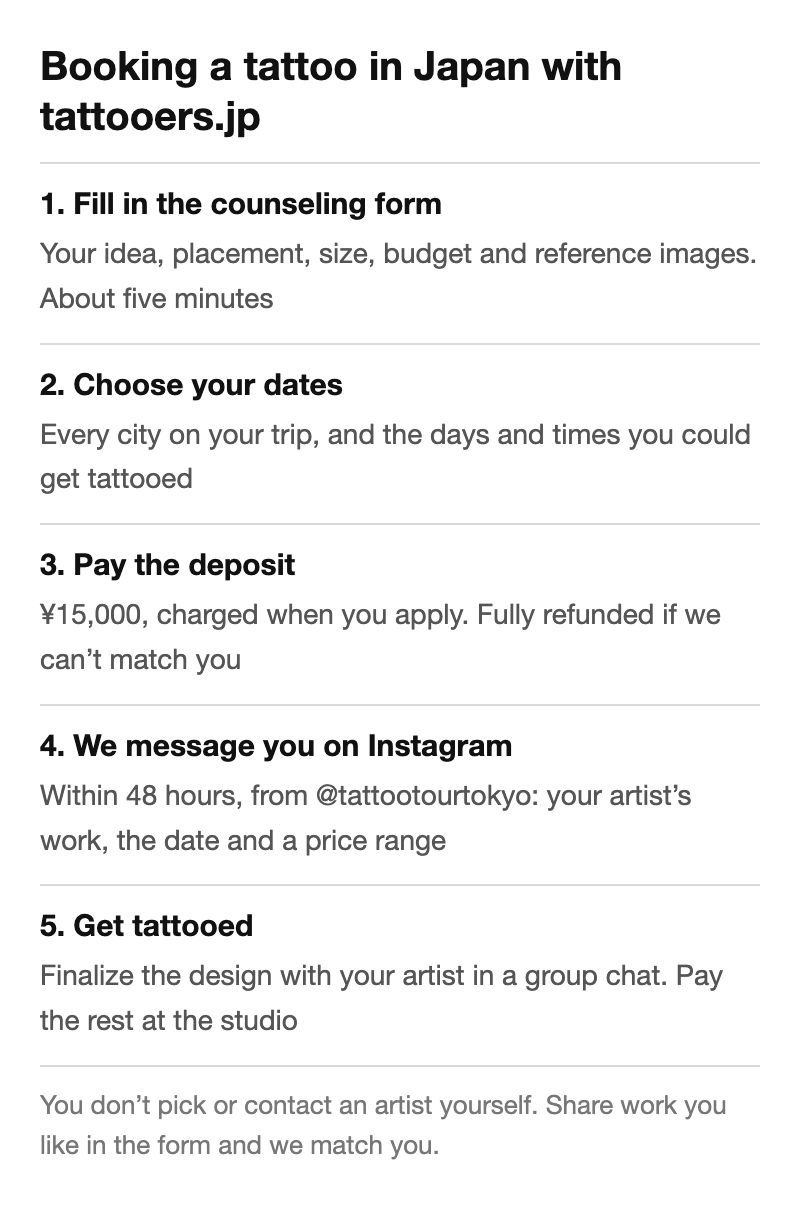
If you book through our matching service for visitors, you don't search a list or message artists one by one. Our team in Japan picks an artist for you:
- Fill in the counseling form: your idea, placement, size, budget and reference images
- Choose your dates: every city on your trip and when you are free
- Pay the deposit: ¥15,000, fully refunded if we can't match you
- We message you on Instagram within 48 hours, from @tattootourtokyo, with your artist's work, the date and a price range
- Get tattooed: finalize the design with your artist in a group chat, then pay the rest at the studio
You can't request a specific artist. Instead, share artists or styles you like in the form, and we use them as a guide. The next sections cover what to put in that form.
Deposits
Expect to pay a deposit before your date is confirmed. Many artists in Japan may ask for one to hold a session. With tattooers.jp, the deposit is ¥15,000, charged when you apply and refunded in full if we can't match you. ¥10,000 goes toward your tattoo; the ¥5,000 matching fee is non-refundable once you're matched. Cancel 7+ days before and ¥10,000 comes back; later or no-show, the deposit goes to the artist. See the full refund and cancellation rules.
Do Tattoo Artists in Japan Speak English?
Many studios now work in English, but not all, and a lot of artists post only in Japanese. That is one of the main reasons visitors find it hard to book on their own.
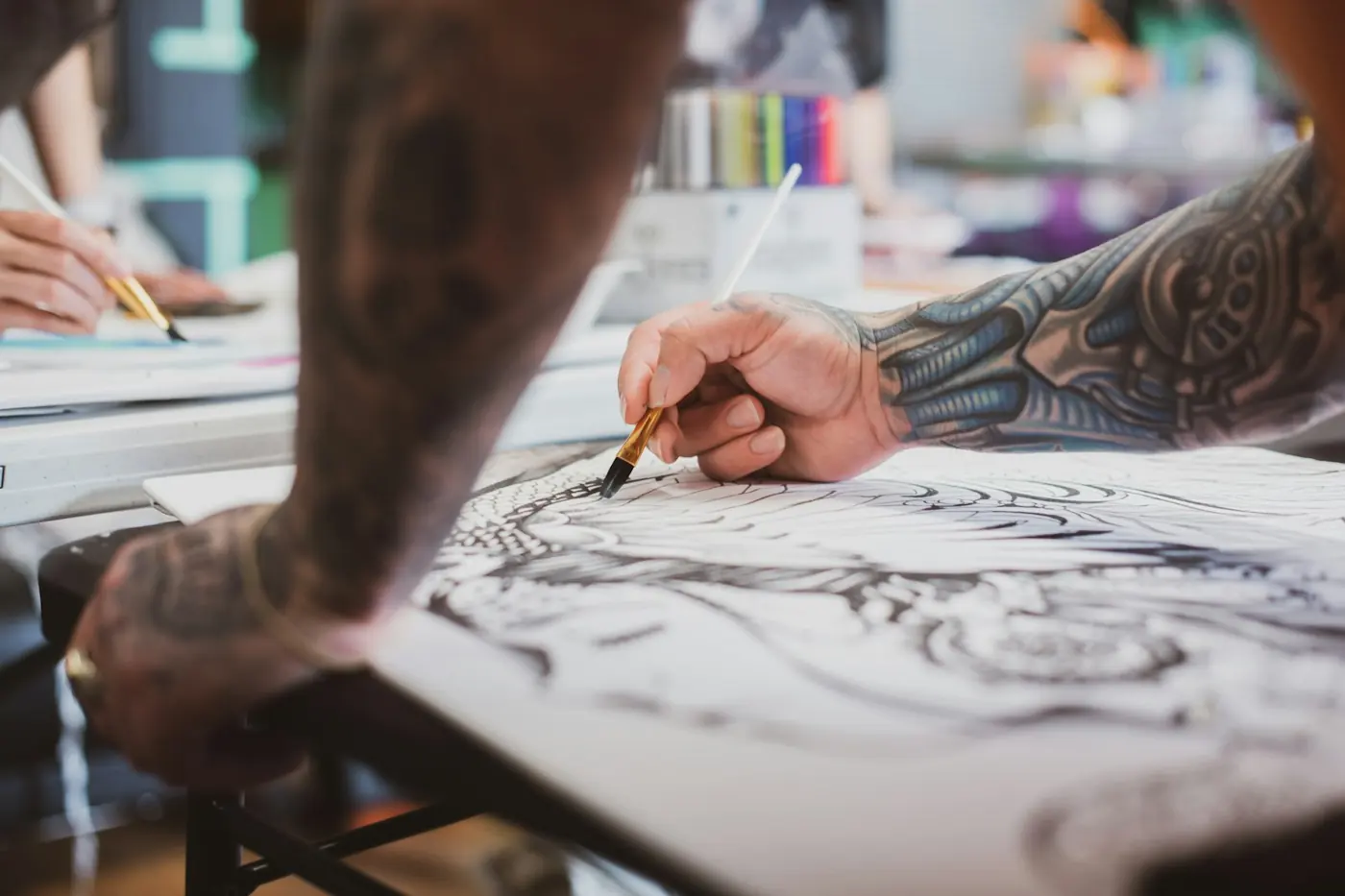 Photo: Jordan Whitt / Unsplash
If you choose "English, please" in our form, we match you with an artist who speaks English and tell you their level when we confirm. You can also browse English-speaking tattoo artists in Japan. Our team handles the back-and-forth in Japanese, and messages are translated when needed.
A few habits make any language gap smaller:
- Let pictures do the talking. Two or three reference images, with a note on what you like about each (the thin lines, the shading, the layout), say more than a long description
- Give sizes in centimeters. "About 5 cm tall" is clearer than "small"
- Name the exact spot. Left or right, inner or outer, and how high up
- Mention anything about your body. Allergies (including to metals or latex), skin conditions, medication you take
If you want Japanese text or kanji
Tell us the meaning you want, not just the characters you found online. Kanji copied from the internet sometimes turns out to be the wrong character or to read oddly. A Japanese artist can check that the wording reads naturally and suggest a layout. If you want a Japanese motif rather than text, our guide to Japanese tattoo meanings explains what dragons, koi, peonies and other classic subjects are often said to stand for.
Choosing a Style: Find Work You Like and Share It
The most important choice for a first tattoo is a style you will still like in ten years, done by an artist who is good at that style. With tattooers.jp, you don't pick the artist, but you decide the style. The clearer your references, the better the match.
Here are a few styles that first-timers often choose, from artists listed on tattooers.jp.
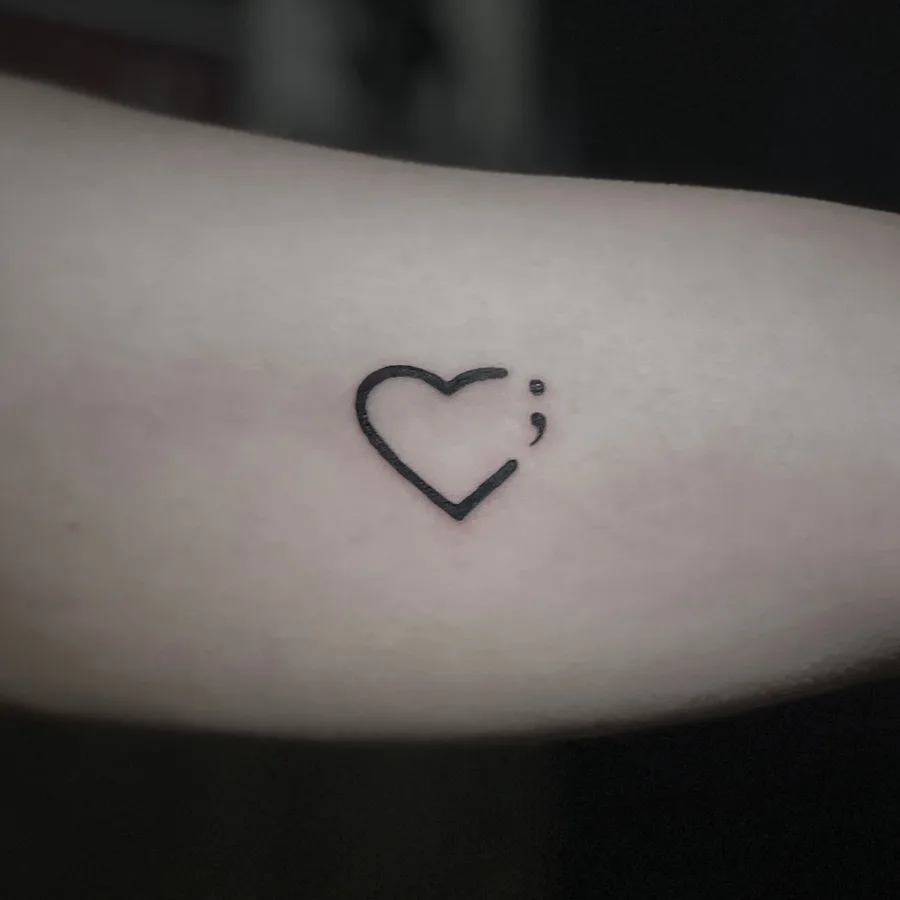 One-point heart | SOLE
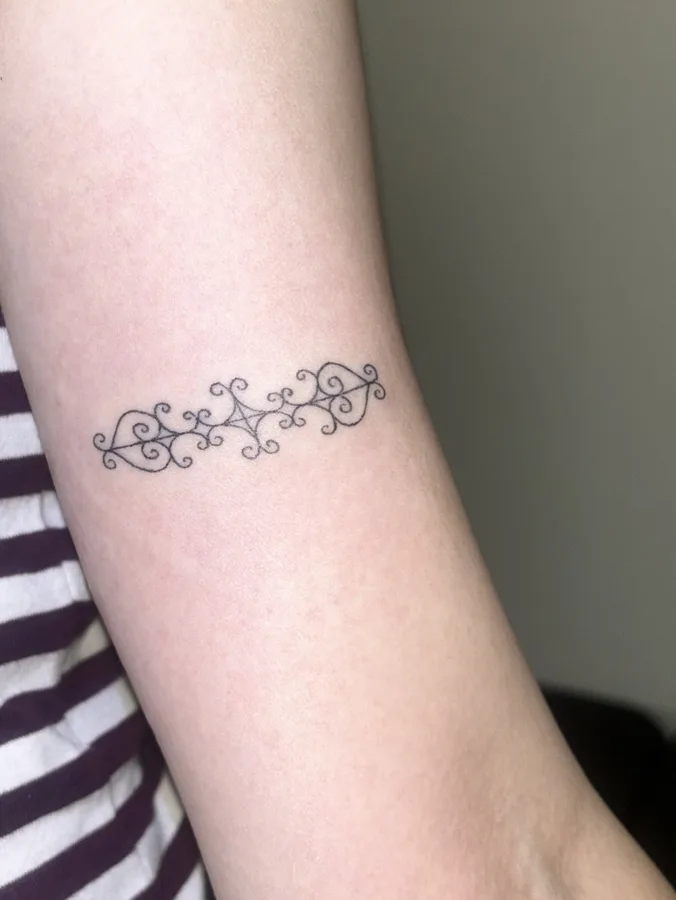 Fine line ornament | miantatu
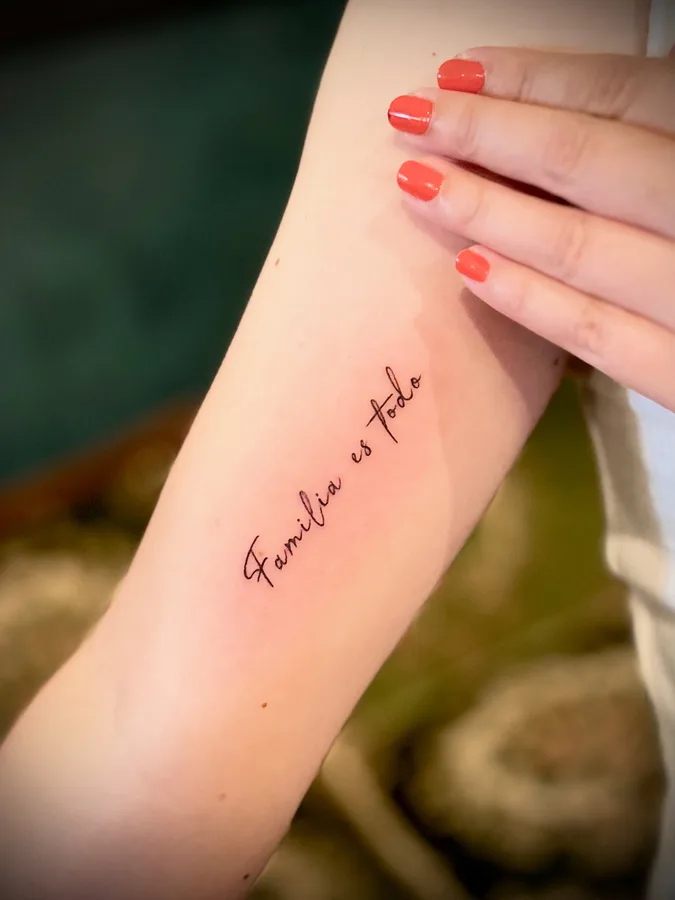 Script lettering | NaO
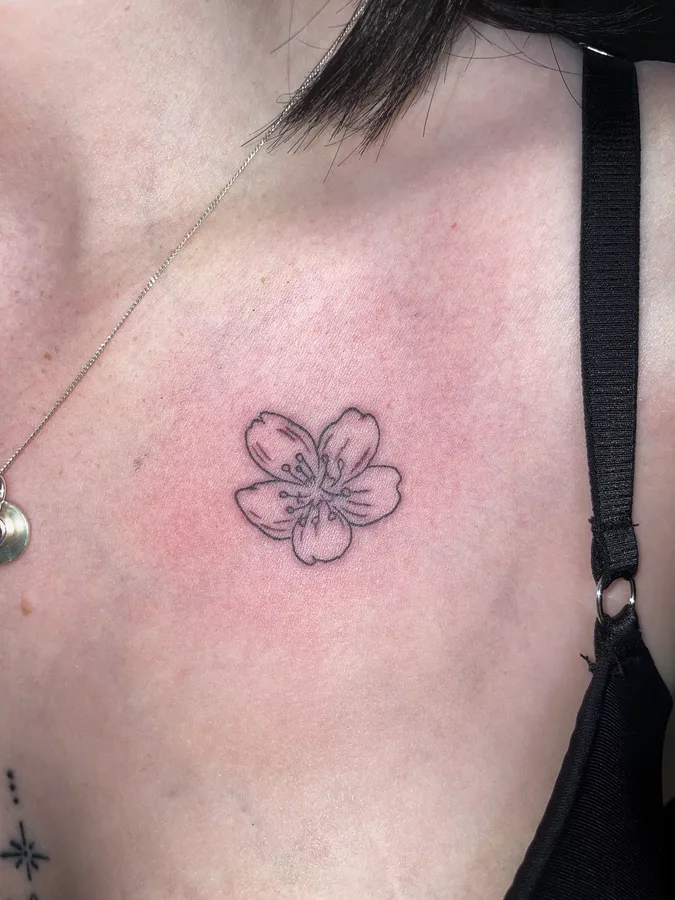 Cherry blossom outline | SOU
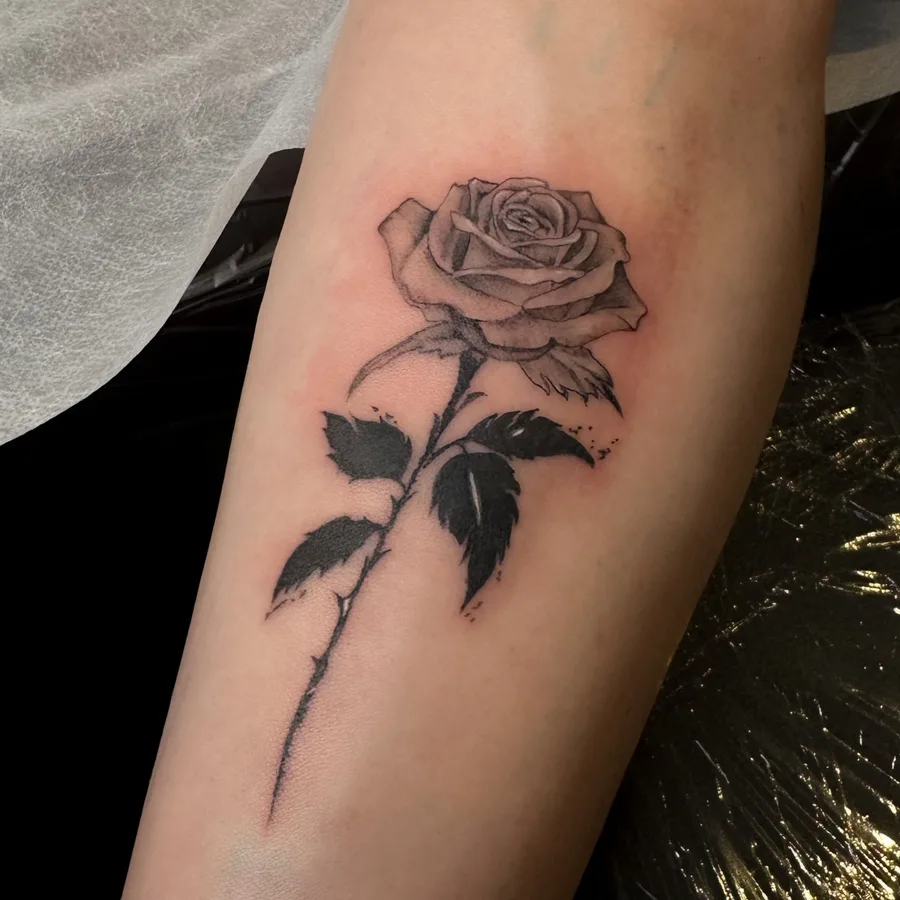 Black and gray rose | YURA
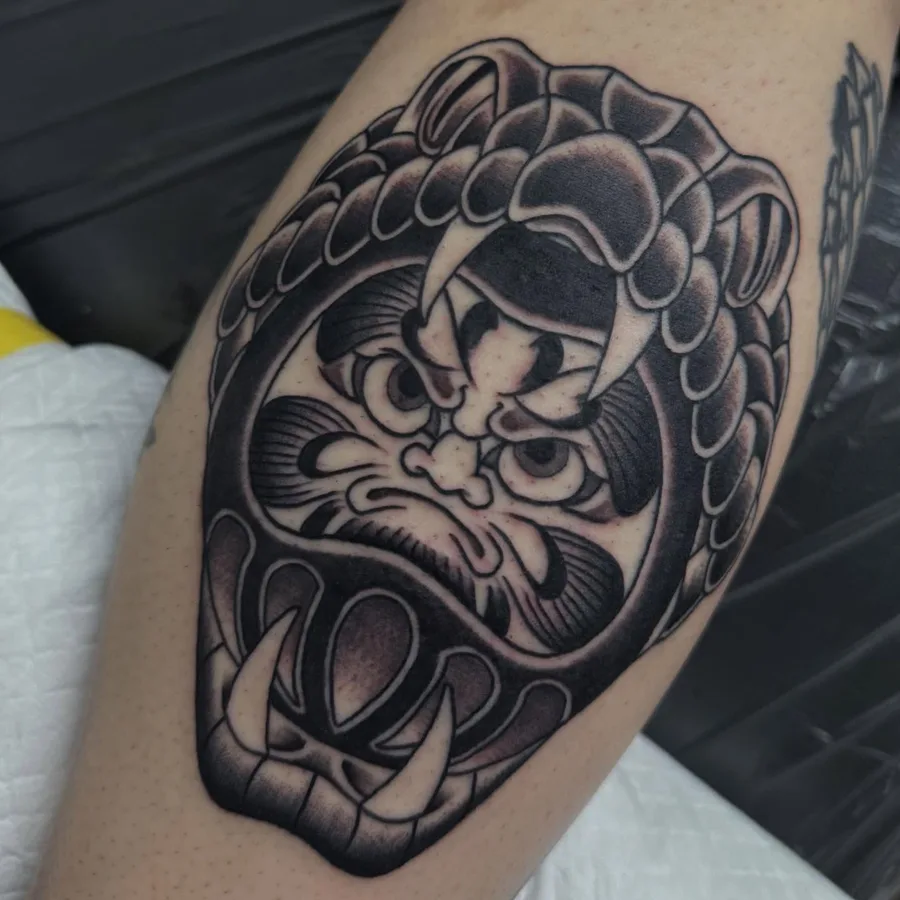 Japanese snake and daruma | 西村弘司 Koji Nishimura
Images are quoted from works by artists listed on tattooers.jp (as of November 16, 2026). Tap an image to open the work.
Artist pages: SOLE / miantatu / NaO / SOU / YURA / Koji Nishimura. Browse by style: one-point, fine line, lettering, black and gray and Japanese.
Some artists also offer ready-made designs they have drawn in advance, called flash. How it works and how to ask for one is in our guide to flash tattoos in Japan.
What to look at in work you like
When you save work as a reference, zoom in on your phone and look closely:
- Lines: even in thickness (unless the design varies them on purpose), smooth curves, crisp edges, no gaps where lines meet
- Fill and shading: no patchy areas in solid black or color, smooth gradients, clean borders between colors. Styles like dotwork or sketch keep texture on purpose
- Many pieces, not one: compare several works in the same style. Lighting and camera angle change how a single photo looks
- Healed photos: most posted photos are taken right after the session, when the skin is red and shiny. A healed photo shows how lines and colors settle. Not having healed photos is not a bad sign, though; clients don't always come back for a picture
Share references as inspiration, not as something to copy. Asking an artist to reproduce another artist's tattoo line for line is taking that artist's work. Say what you like about it, and let your artist design something for you.
Japanese traditional style is a specialty
Not every artist in Japan does wabori, the traditional Japanese style also called irezumi. It is a specialty, and tebori, tattooing by hand with needles on a rod instead of a machine, is offered by fewer artists still (see tebori artists). If you want either, say so in the form. Large traditional pieces usually take several sessions, so a short trip is better suited to a smaller piece. To see subjects in the traditional style, read about dragon tattoos or Japanese flower tattoos.
Choosing an Artist and Studio: What to Tell Us and What to Check
You don't pick the artist through our matching service, but you decide what matters to you, and you can check the details before the day. The form's "What matters" options are: Japanese feel, very clean studio, female artist or staff, irezumi (wabori) specialist, traditional Japanese tebori, hand-poke and private room. We use the ones you tick when we match you.
- Private room: in our count of public artist profiles, about 12% mention a private room or private studio (November 5, 2026). A "private studio" is not always a private room. If you want to be out of view, tick "Private room" and name the spot (chest, stomach, lower back and upper thigh show the most skin). Arms and ankles can usually be done in a shared room without undressing
- The artist's work: our message gives you the artist's work and a price range. Check the work against the points in "What to look at in work you like" above, in the style you want
- Price questions: in the group chat with your artist, ask what the total will be, whether a design fee is separate, how many revisions of the stencil you get, whether touch-ups are included and for how long. If your piece will take more than one session, ask how many sessions and what the total will be. Deposit and cancellation terms are in our refund and cancellation rules. Quotes can change if you change the size or placement on the day
- Prices far below normal: very cheap sessions and "free model wanted" calls are often practice for trainee artists (our view). A tattoo lasts a lifetime, so don't choose on price alone. Typical prices by size are in our price guide
Choosing Placement: Pain, Onsen and How Easy It Is to Hide
For a first tattoo in Japan, think about three things: how much it hurts, how visible it is, and whether you can cover it for onsen and other places that don't allow tattoos. Spots that everyday clothes cover, such as the upper arm, shoulder, back, chest or thigh, keep your options open.
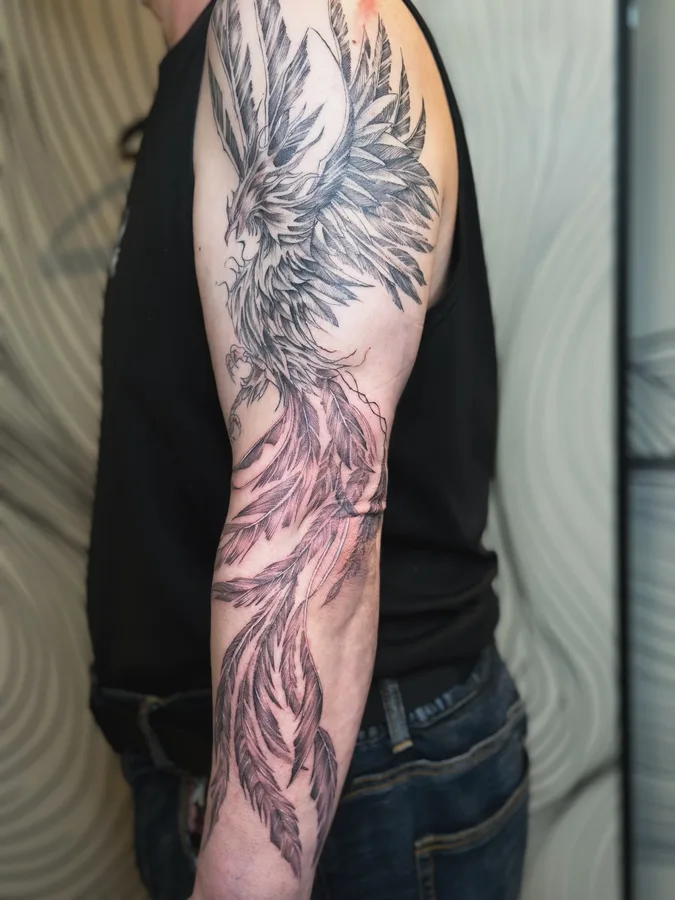 Arm, phoenix | YURA
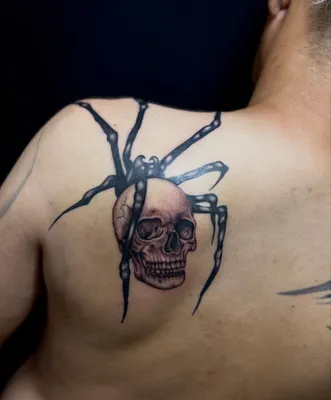 Shoulder, skull and spider | Ken
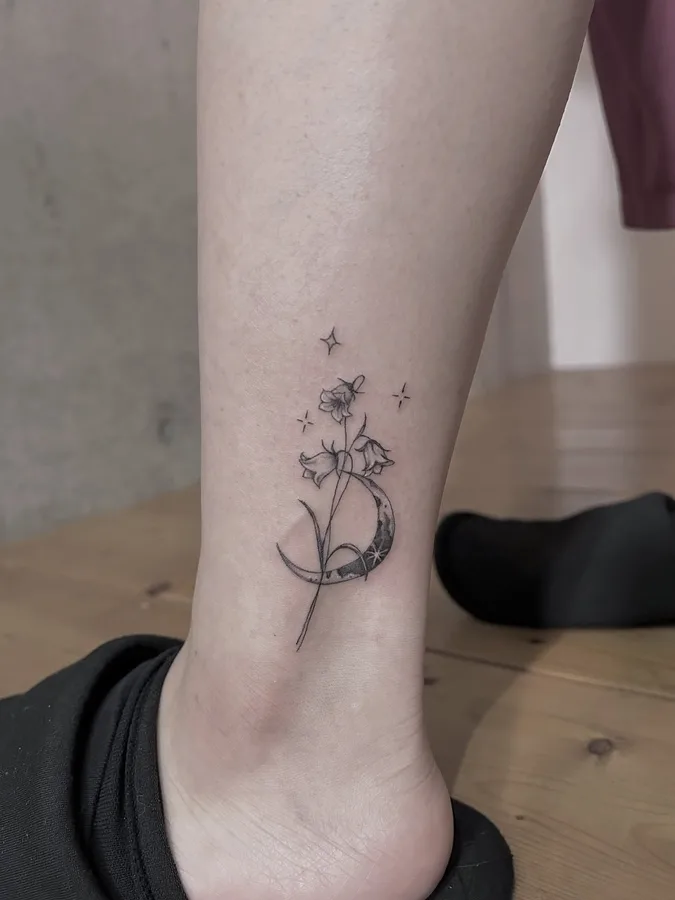 Ankle, lily of the valley and moon | MARINO
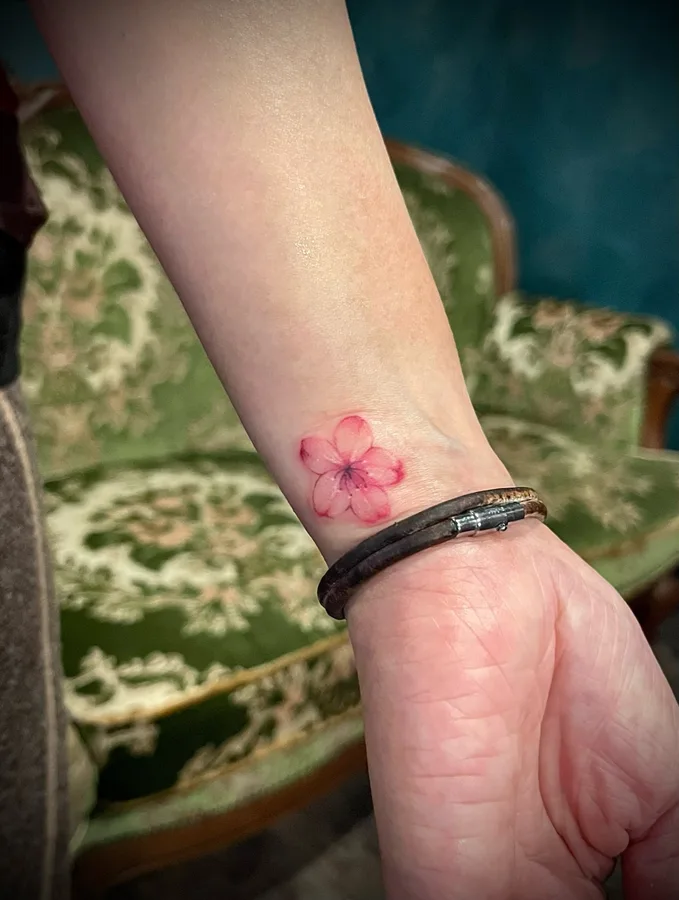 Wrist, cherry blossom | NaO
Images are quoted from works by artists listed on tattooers.jp (as of November 16, 2026). Tap an image to open the work.
Artist pages: YURA / Ken / MARINO / NaO.
| Placement | Visibility | Easy to cover? | Browse |
|---|---|---|---|
| Upper arm (outer) | Hidden by a T-shirt sleeve if placed high enough | Yes, with clothing; small pieces with a sticker | Arm |
| Shoulder | Hidden by most tops | Yes | Shoulder |
| Back | Hidden; you can't see it yourself either | Yes, with clothing; too large for stickers | Back |
| Chest | Hidden; the collarbone area shows in open necklines | Yes | Chest |
| Thigh and leg | Thigh hidden by shorts; shins and calves show | Thigh yes; lower leg depends on clothing | Leg |
| Ankle | Shows with bare feet | Small pieces, yes | Ankle |
| Wrist and forearm | You and others see it all the time | Harder; a watch or sleeve helps | Wrist |
| Hands, fingers, neck | Always visible | Hard to cover |
Pain
Pain depends on the spot and the person. Areas close to bone or with thin skin are generally said to hurt more. Our tattoo pain chart by body part ranks the common spots and lists gentler choices for a first tattoo. If you are nervous about pain, say so in the form.
Onsen, gyms and covering up
In Japan, being able to hide a tattoo is practical, not just a matter of taste. In a 2015 survey of hotels and inns by Japan's tourism agency, 56% of the 581 facilities that answered refused bathers with tattoos [4]. In 2016 the agency said that refusing foreign visitors only because of a tattoo was not appropriate, but each facility still sets its own rules [5].
A small piece in a spot a cover sticker can hide gives you the most choice later. Our guide on how to cover tattoos in Japan compares stickers, clothing and tape, and our tattoo-friendly onsen, sento and sauna map shows which facilities accept tattoos and on what terms. Staying in Tokyo? Our guide to tattoo-friendly onsen in Tokyo compares the rules there.
Fitting a Tattoo into Your Trip
Do your onsen, pools and beach days first, and book the tattoo near the end of your trip. A fresh tattoo is an open wound. It should not go in a bath, pool or the sea until it has fully healed, usually two weeks or more, longer for large pieces. Even baths that allow tattoos are no exception, and a private bath doesn't change that.
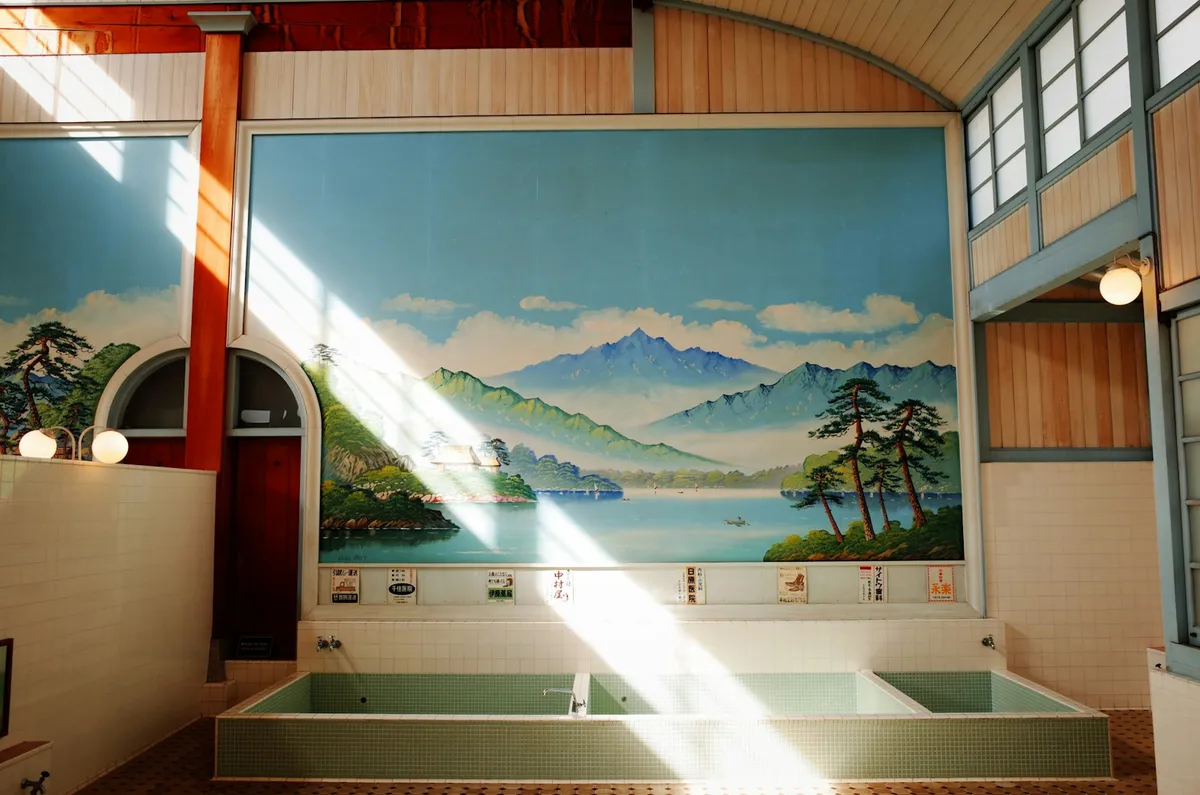 Photo: Soyoung HAN / Unsplash
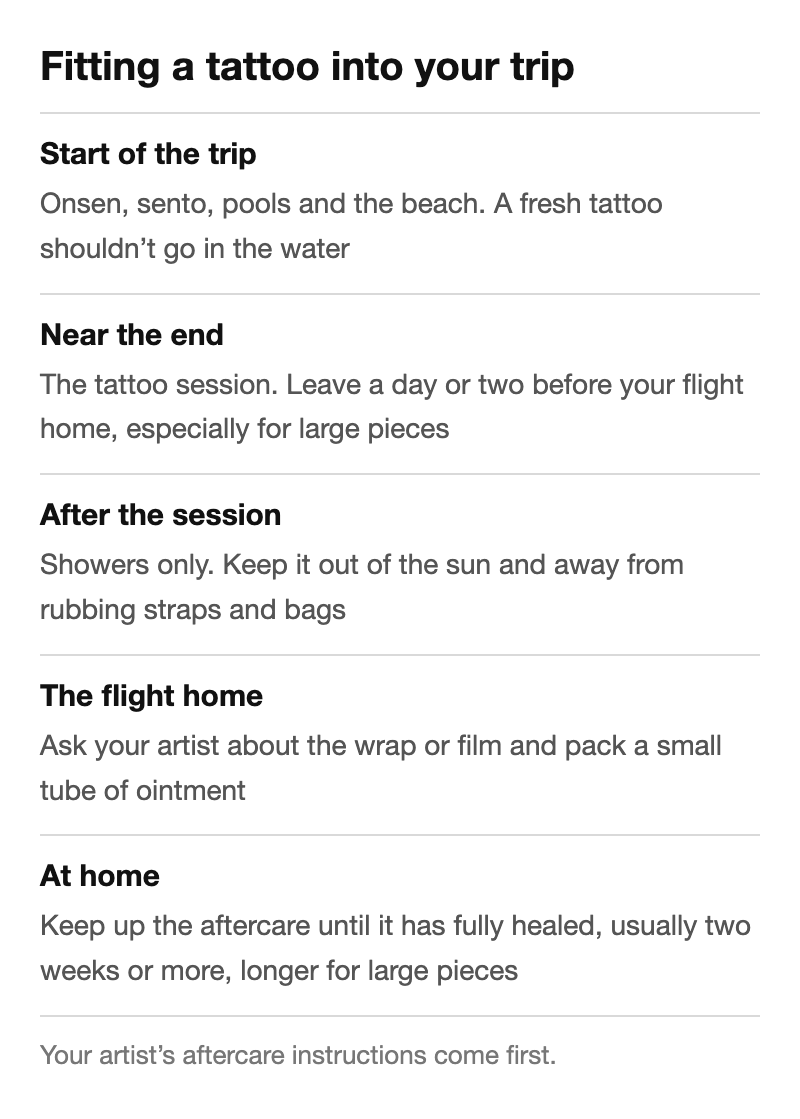
A few more planning points:
- Leave a day or two before your flight home. The EADV leaflet lists a long flight right after a session as something to avoid, especially with large pieces [10]. A spare day also helps if the session runs long or the date has to move
- Plan a lighter day after the session. A fresh tattoo can be sore, and tight shoes, straps or clothes may rub it
- Summer sun is strong. Keep a healing tattoo covered with loose clothing rather than sunscreen until it heals
- Multi-session pieces. If your piece needs more than one session, you book the follow-ups directly with your artist
For washing in a hotel room, what to buy at a drugstore and flying home with a fresh tattoo, read our guide to tattoo aftercare while traveling in Japan.
On the Day: Etiquette and What to Bring
Arrive on time, bring your passport, eat beforehand, and pay the balance in the way your studio asks. Many studios take cash only, and tipping is not expected. The steps differ by studio, but most sessions run like this.
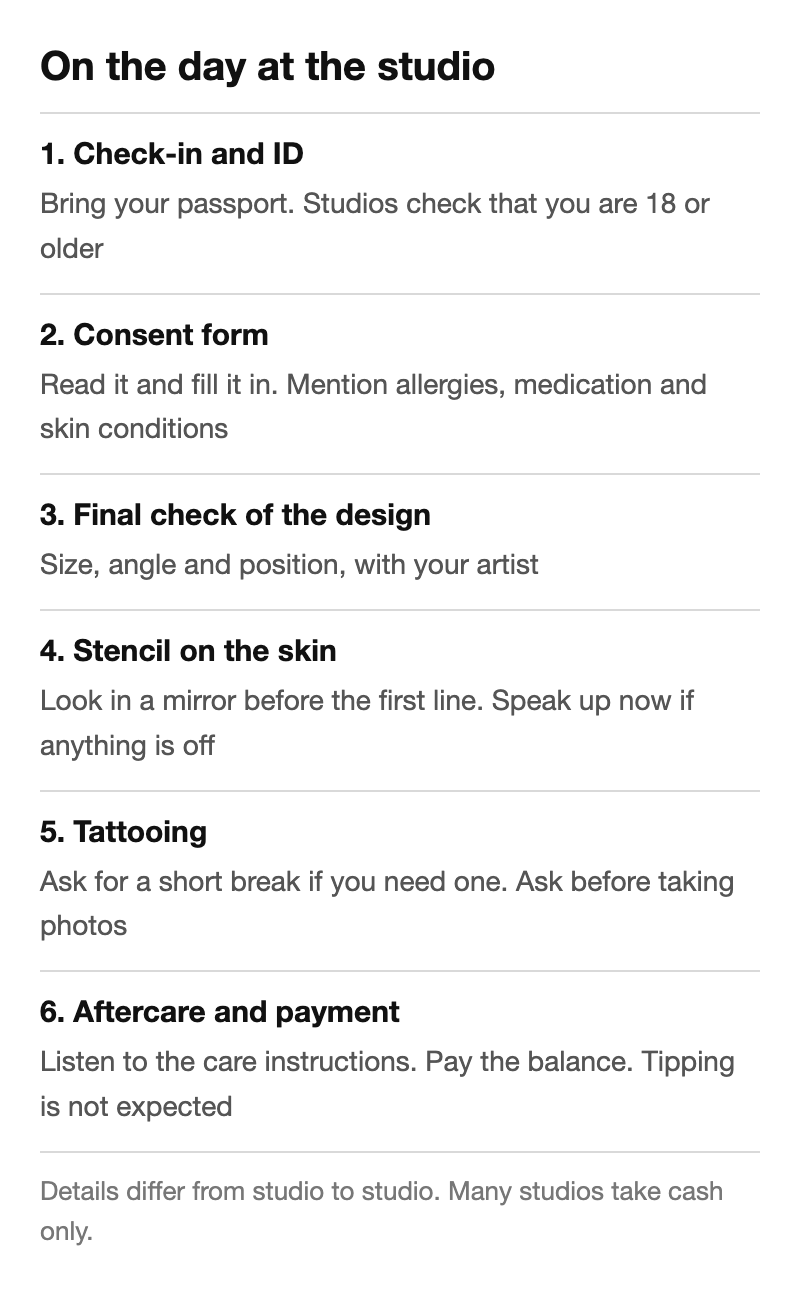
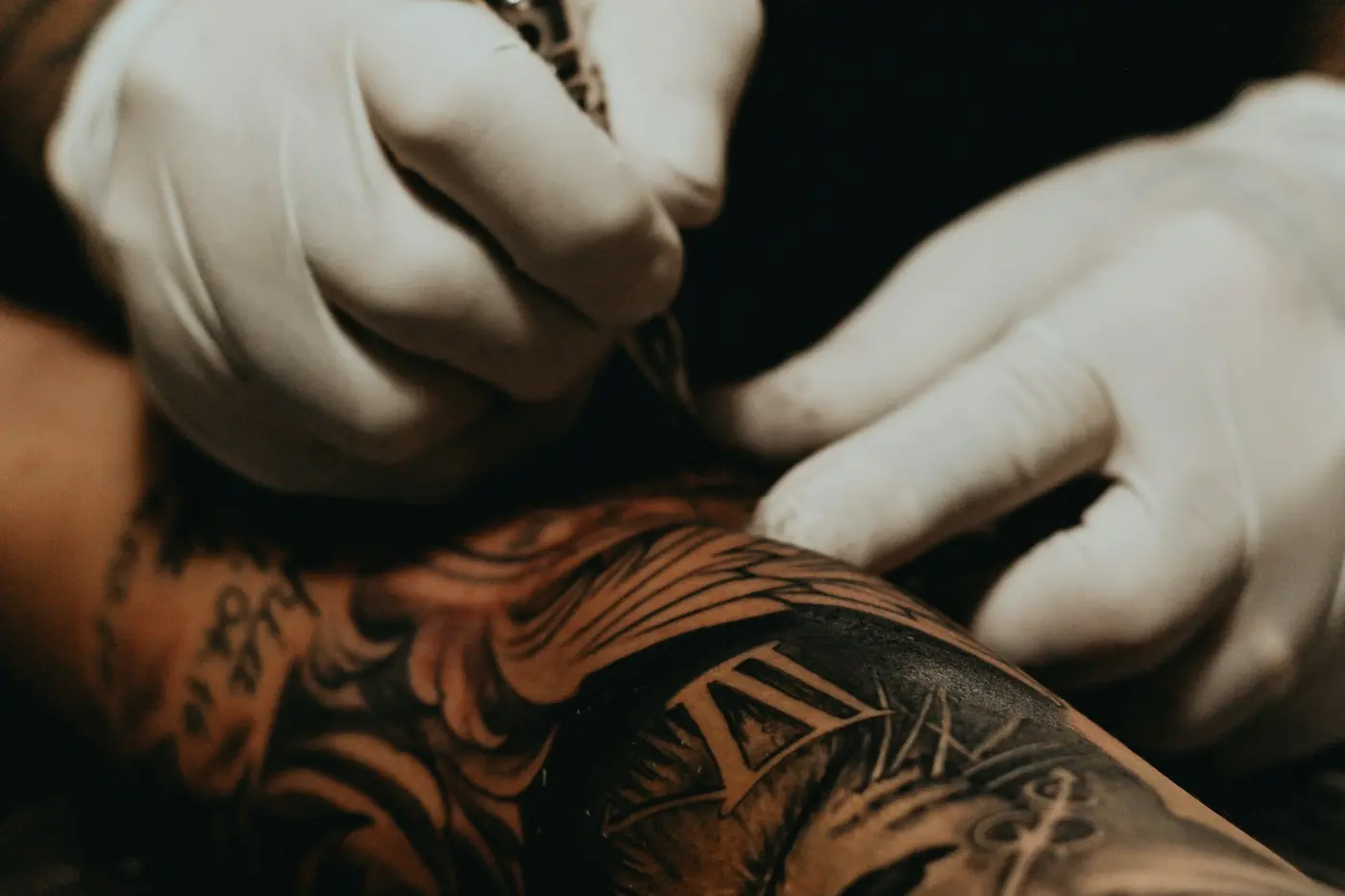 Photo: Allef Vinicius / Unsplash
First tattoo tips for the day before
- Sleep well and skip alcohol the night before
- Eat a proper meal. Sitting through a session on an empty stomach can make the pain feel worse and leave you lightheaded
- Wear clothes that give easy access to the spot, and that you don't mind getting a little ink on
- Bring your passport, and cash if your studio needs it
- If you feel unwell, tell us or your artist as early as you can
During the session
- Breaks are fine. If you feel faint, need the toilet or need to stretch, say so. It is better to pause than to tense up
- Ask before taking photos or video. Other clients may be in the room, and some artists prefer their workspace not to be filmed
- Keep still. Sudden movements make the artist's job harder. If you need to move, say so first
- Check hygiene without worrying about being rude. The artist should use new needles, sterile equipment and new disposable gloves [8][9]. Toronto's rules for studios also ask artists to open sterile packages in front of the client and to cover parts of the machine that can't be cleaned with single-use plastic wrap, changed for each client [8]
Paying and saying thank you
Tipping is not customary in Japan, and it is not expected [3]. Pay the agreed price and say "arigatō gozaimashita" (thank you very much). Many studios take cash only; with tattooers.jp, we tell you how to pay the balance when we confirm your booking.
Health and Hygiene Before You Commit
A tattoo stays for life, so check a few health points first. Some of these are rules in Japan; your home country may have different ones.
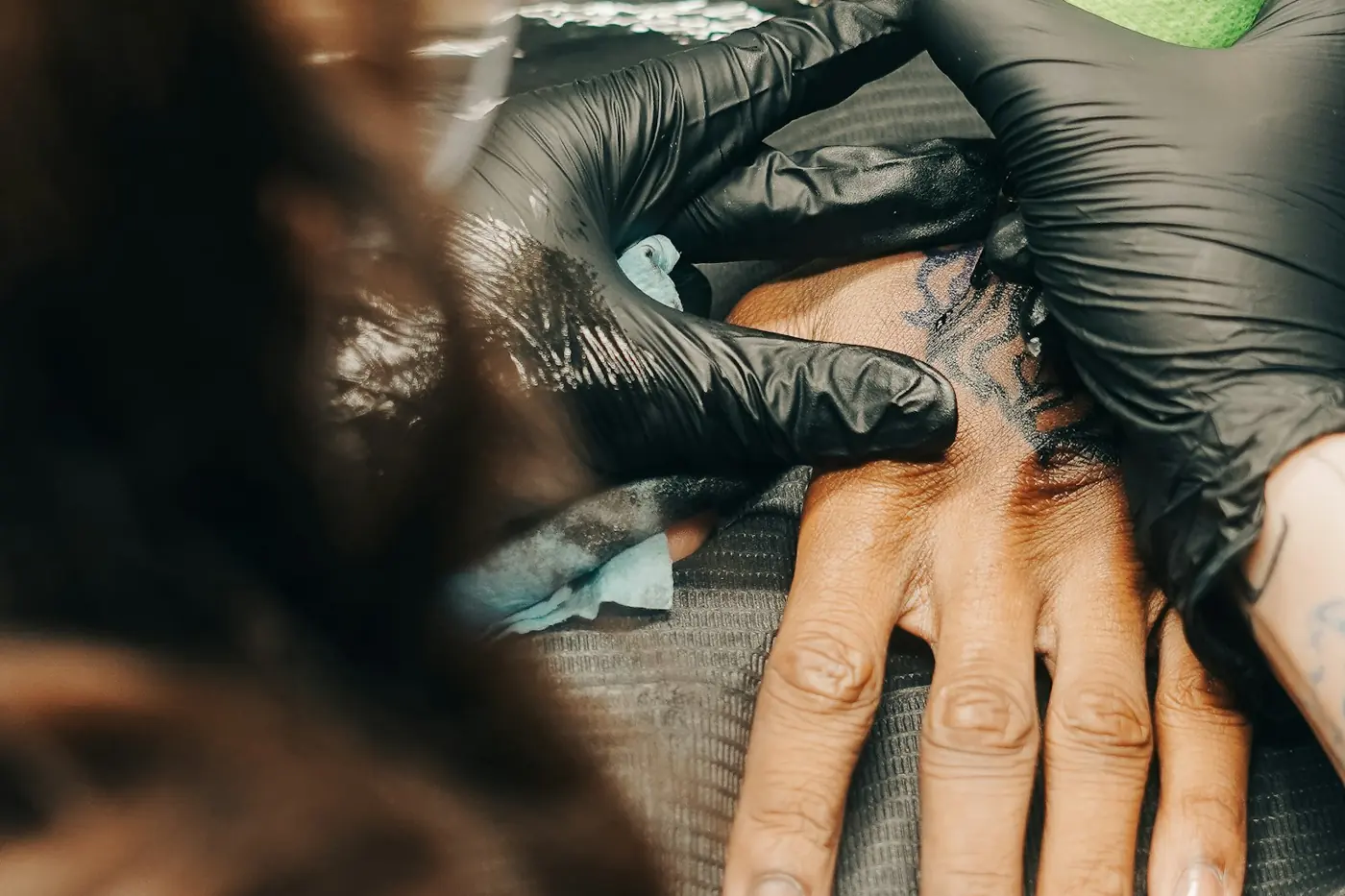 Photo: Collin Wigger / Unsplash
| Topic | What to know |
|---|---|
| Infection | Hepatitis B and C and other infections can spread through tattoo equipment that is not properly cleaned and sterilized [6][7]. On the day, you can check that the needle is new and sealed and the equipment is sterile (see the hygiene tips above) |
| Blood donation | The Japanese Red Cross asks people not to give blood within 6 months of getting a tattoo [12]. Check your home country's rules |
| MRI scans | Rare cases of swelling or burning in a tattoo during an MRI scan have been reported. Tell the doctor or technician that you have a tattoo before the scan [13] |
| Laser hair removal | Clinics in Japan avoid tattooed skin and a margin around it, because the laser can react with the ink and burn the skin. Finish hair removal on that area first [14][15] |
| Removal | Laser removal usually takes several treatments and may not remove a tattoo completely without a trace [13] |
Aftercare: The First Weeks
Keep it clean, wash it gently, use only a thin layer of whatever your artist recommends, and don't pick or scratch. There is no single correct aftercare method; artists have their own preferences, and your artist's instructions come first [10].
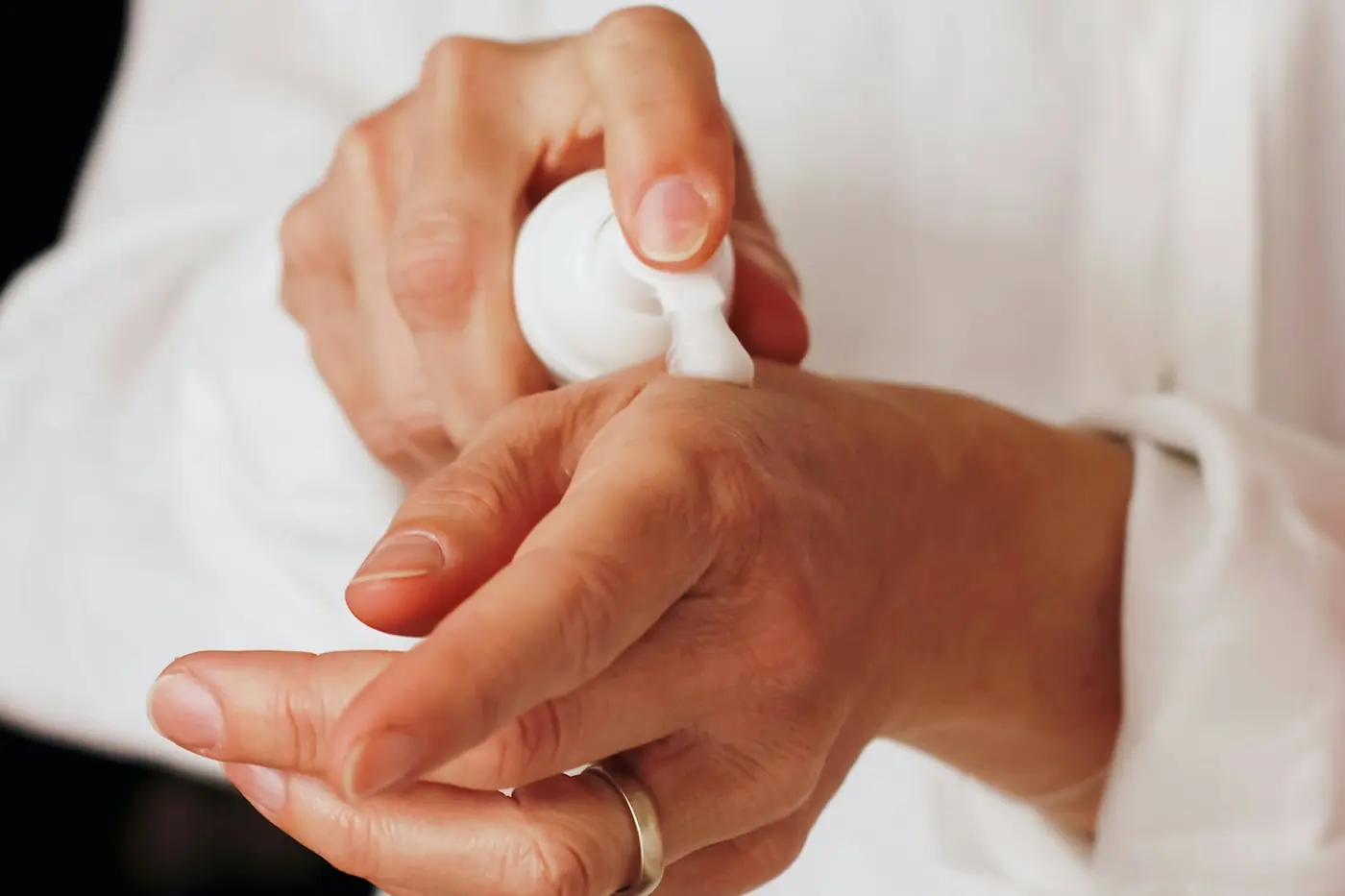 Photo: Nataliya Melnychuk / Unsplash
The basics that dermatology sources describe [10][11]:
- Wash your hands before touching the tattoo, then wash it gently without rubbing and pat it dry
- Apply moisturizer or ointment thinly, not thickly
- Don't pick scabs or peeling skin
- Keep it out of direct sun until it heals
- No baths, onsen, saunas, pools or the sea until it has fully healed. Showers are fine
See a doctor right away if red streaks spread out from the tattoo or you have a fever, which can be signs of a serious infection [10][11].
If you booked through tattooers.jp, ask in the group chat with your artist and our team if something looks wrong; you can send photos there. Ask too whether touch-ups for faded areas are free, and for how long. That varies by artist. The day-by-day version for travelers is in our aftercare guide for traveling in Japan.
Frequently Asked Questions
Q. Can I walk in to a tattoo studio in Japan?
Rarely. Few studios take walk-ins, and only about 5% of public artist profiles on tattooers.jp mention walk-ins or same-day sessions (our count, November 2026). Book before your trip.
Q. Do I tip my tattoo artist in Japan?
No. Tipping is not customary in Japan [3]. Pay the agreed price and thank your artist. Many studios take cash only, so check how to pay in advance.
Q. How old do I need to be to get a tattoo in Japan?
18 or older. 39 of 47 prefectures ban tattooing anyone under 18 [2], and some studios ask for 20 or older. Bring your passport on the day.
Q. Can I go to an onsen after getting a tattoo?
Not until it has fully healed, usually two weeks or more. Go to the onsen first and get tattooed near the end of your trip. After it heals, check each facility's rules on our tattoo-friendly map.
Q. Can I choose a specific artist?
Not through our matching service. Share the artists and styles you like in the form, and we match you with an artist who fits your request, dates and budget.
Summary
- Tattooing adults is legal in Japan. Be 18 or older and bring your passport
- Book ahead. Few studios take walk-ins, and popular artists can be booked up for months
- Choose a style first. Save work you like and say what you like about it
- Pick a placement you can cover, and check the pain level
- Do onsen and swimming first, and get tattooed near the end of your trip
- On the day: eat, take breaks when you need them, ask before filming, pay as the studio asks, and don't tip
- Follow your artist's aftercare, and see a doctor if signs of infection appear
Ready to plan it? Tell us your trip and get matched with an artist in Japan: fill in the form, choose your dates, and we message you on Instagram within 48 hours. The ¥15,000 deposit is fully refunded if we can't match you. You can also browse tattoo artists in Japan for work you like, then share it in the form. For costs, see the tattoo price guide.
References
Our count of walk-in and appointment wording is based on the public profile text of artists listed on tattooers.jp (November 5, 2026). Sources from outside Japan may not reflect Japanese rules or medical practice. If you have health concerns, ask a doctor before getting tattooed.
- Supreme Court of Japan, Second Petty Bench. Decision of September 16, 2020, case on violation of the Medical Practitioners' Act (Japanese). Accessed November 16, 2026.
- Research Institute for Local Government. Youth protection ordinances (Japanese, updated June 13, 2026). Accessed November 16, 2026.
- Japan National Tourism Organization. Tipping in Japan. Accessed November 16, 2026.
- Nikkei (2015). 56% refuse bathers with tattoos: first tourism agency survey as foreign visitors rise (Japanese, October 22, 2015). Accessed November 16, 2026.
- Japan Tourism Agency notice of March 16, 2016, and Ministry of Health, Labour and Welfare notice of March 18, 2016. Responding to foreign travelers with tattoos at bathing facilities (PDF, Japanese). Accessed November 16, 2026.
- Ministry of Health, Labour and Welfare research group (2014). Guidelines for preventing the spread of viral hepatitis in daily life (for the general public) (PDF, Japanese). Accessed November 16, 2026.
- FORTH, Quarantine Station, Ministry of Health, Labour and Welfare (2011). The risks of tattoos and body piercing abroad (Japanese, December 28, 2011). Accessed November 16, 2026.
- City of Toronto. Tattooing (BodySafe: Infection Prevention and Control). Accessed November 16, 2026.
- MyHealth.Alberta.ca, Government of Alberta. Tattoo and Piercing Safety. Accessed November 16, 2026.
- European Academy of Dermatology and Venereology (EADV) Tattoos and Body Art Task Force (2021). Information Leaflet for Patients: Tattoo aftercare (PDF). Accessed November 16, 2026.
- Cleveland Clinic (2026). Tattoo Aftercare Tips From a Dermatologist (March 20, 2026). Accessed November 16, 2026.
- Japanese Red Cross Society. When we ask you not to donate blood (Japanese). Accessed November 16, 2026.
- U.S. Food and Drug Administration (2024). Tattoos & Permanent Makeup: Fact Sheet. Accessed November 16, 2026.
- Men's Rize (Rize Clinic). Should I finish hair removal before getting a tattoo? (Japanese). Accessed November 16, 2026.
- Frey-A Clinic. Can you treat areas with tattoos? (Japanese). Accessed November 16, 2026.
