A bonji tattoo is a Sanskrit tattoo in the Japanese tradition: one character from Siddham, an old Indian script, that stands for one Buddhist deity. In Japan, a popular choice is the character of your zodiac guardian deity, the Buddha or bodhisattva said to protect people born in your animal year of the Chinese zodiac.
Eight deities share the twelve animals, so some years share a character. The pairing is a folk belief that spread in Japan by the Edo period (1603–1868), not a rule from Buddhist scripture [4][16]. You do not need to be a Buddhist to wear one. Many people choose a bonji the way they would choose a charm: a quiet wish or resolve, carried on the skin.
This guide covers:
- What bonji are, and how they differ from the Om symbol
- A lookup table: your birth year, your zodiac animal, your guardian deity and its bonji
- Where the belief comes from, and why temples and sources sometimes differ
- What to know first: bonji on graves in Japan, travel to Buddhist countries, and how to check the character's shape before it is tattooed
Want to see work first? Browse lettering tattoos by artists in Japan on tattooers.jp.
What Bonji Are: One Character, One Deity
In Japan, "bonji" (literally "Brahma letters") means Siddham, a script from northern India handed down in Japanese Buddhism. The Research Institute for Languages and Cultures of Asia and Africa at Tokyo University of Foreign Studies describes it as the script known as Siddhamatrka, used in northern India around the 6th to 9th centuries. It was known in Japan from the Nara period (710–794) and brought back in earnest in the early Heian period (early 9th century) by the monk Kukai and others. The study of its sounds is said to have shaped the order of the Japanese syllabary [1].
In Esoteric Buddhism (Shingon and Tendai), each character can stand for a single deity. This is called a seed syllable (shuji in Japanese, bija in Sanskrit). The character "A", for example, stands for Dainichi Nyorai, the cosmic Buddha Vairocana [1]. That is what sets bonji apart from other lettering tattoos: the character is not a word to be read, but a sign for a particular Buddha or bodhisattva.
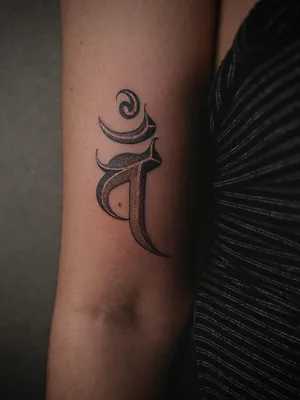
Images are quoted from works by artists listed on tattooers.jp (as of November 16, 2026). Tap an image to open the work.
Artist page: Suzume
The artist's caption for this piece reads "VAM, Dainichi Nyorai", with the words vajra, indestructibility, purification and protective boundary. Some people pick a character by matching words like these to their own wish. Ban is also the zodiac character for the Sheep and Monkey years in the table below.
Bonji are often confused with the Om symbol (ॐ). The familiar Om is written in Devanagari, the script used for Hindi and modern Sanskrit printing. It is a different script from the Siddham bonji used in Japan, even though both appear in Sanskrit tattoos. If you have one in mind, say which one in your request.
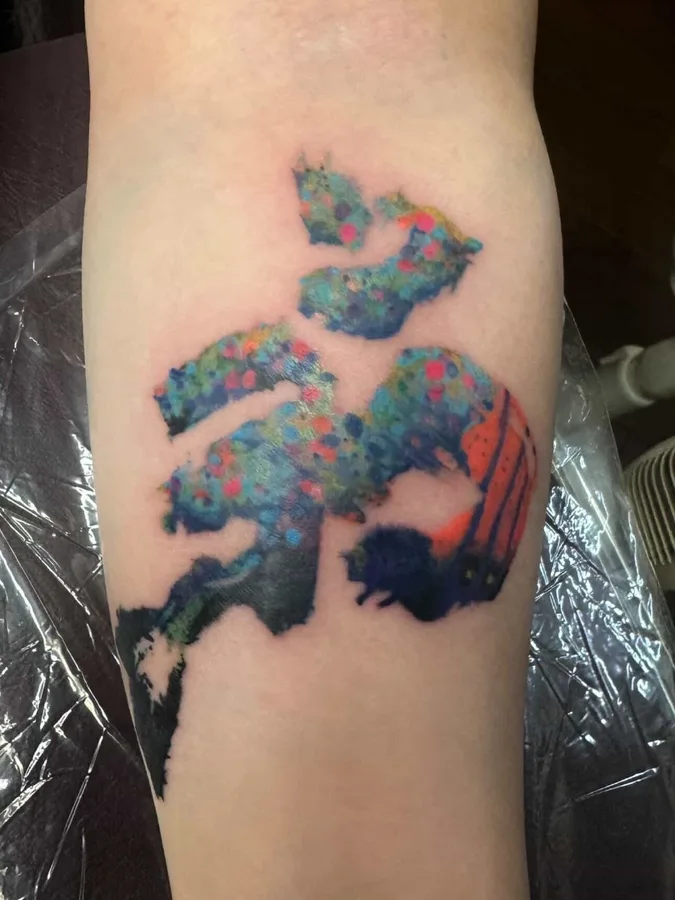
Images are quoted from works by artists listed on tattooers.jp (as of November 16, 2026). Tap an image to open the work.
Artist page: Tsuda
Set this watercolor Om next to Suzume's Ban above and the difference between the two scripts is easy to see.
Japanese Zodiac Guardian Deities and Their Bonji
Each of the twelve zodiac animals is assigned one of eight guardian deities (mamori honzon), and each deity has its own bonji. Find your birth year, and the table gives your animal, your deity and the character.
The zodiac here is the same twelve-animal cycle as the Chinese zodiac. One difference matters: since Japan moved to the Gregorian calendar in 1873, New Year has been January 1 [17], and today the zodiac animal is usually counted by that calendar year [18]. Traditionally the year was counted from Risshun (around February 4), and some fortune-tellers still count it that way [18]. If you were born in January or early February, your animal in Japan may differ from the one a Chinese Lunar New Year chart gives you. Tattooing is for adults (18 and over), so as of 2026 the years start at 1948 and end at 2008.
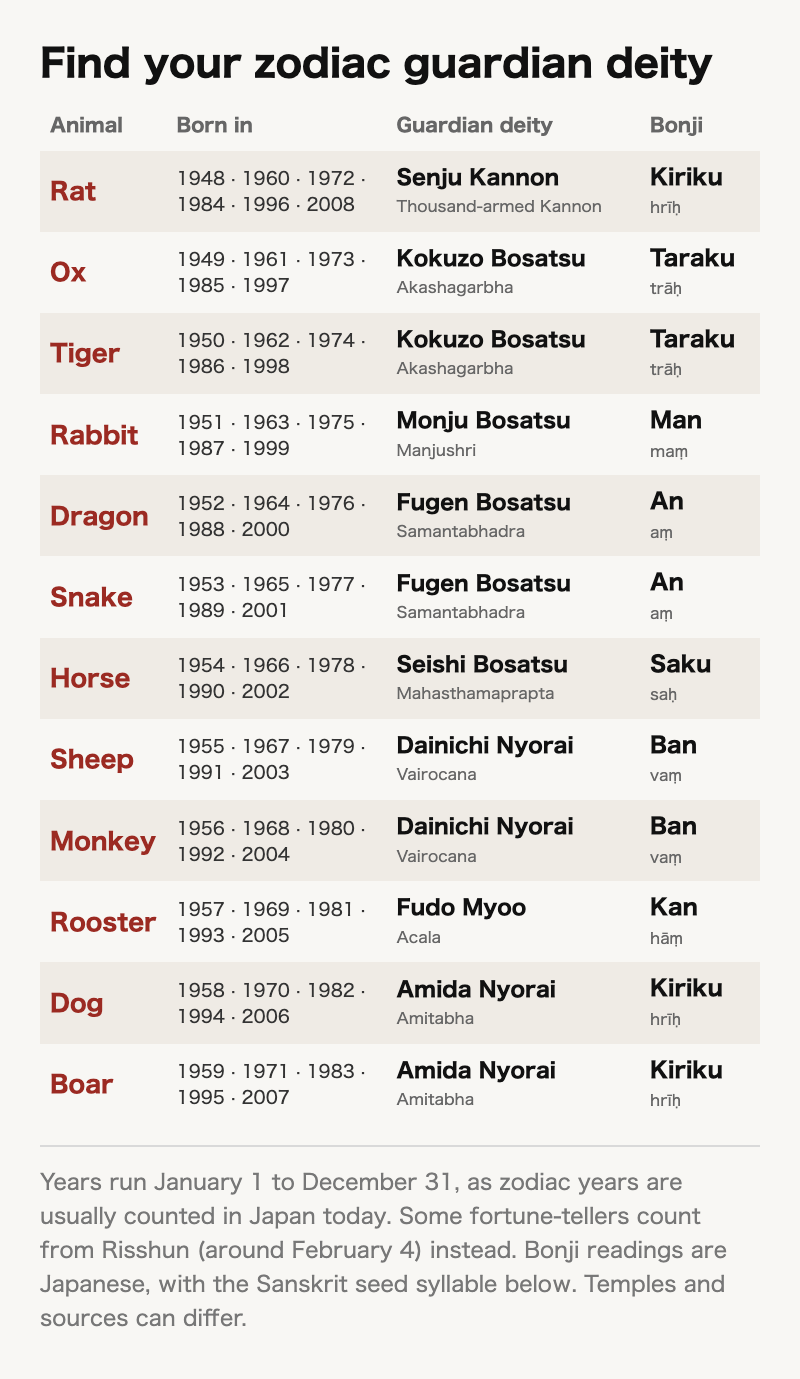 Figure: tattooers.jp editorial team
| Zodiac animal | Born in (Jan 1 to Dec 31) | Guardian deity | Bonji (Japanese reading / Sanskrit) | Direction |
|---|---|---|---|---|
| Rat | 1948, 1960, 1972, 1984, 1996, 2008 (if you are 18 or over) | Senju Kannon (Thousand-armed Avalokiteshvara) | Kiriku / hrīḥ | North |
| Ox | 1949, 1961, 1973, 1985, 1997 | Kokuzo Bosatsu (Akashagarbha) | Taraku / trāḥ | Northeast |
| Tiger | 1950, 1962, 1974, 1986, 1998 | Kokuzo Bosatsu (Akashagarbha) | Taraku / trāḥ | Northeast |
| Rabbit | 1951, 1963, 1975, 1987, 1999 | Monju Bosatsu (Manjushri) | Man / maṃ | East |
| Dragon | 1952, 1964, 1976, 1988, 2000 | Fugen Bosatsu (Samantabhadra) | An / aṃ | Southeast |
| Snake | 1953, 1965, 1977, 1989, 2001 | Fugen Bosatsu (Samantabhadra) | An / aṃ | Southeast |
| Horse | 1954, 1966, 1978, 1990, 2002 | Seishi Bosatsu (Mahasthamaprapta) | Saku / saḥ | South |
| Sheep | 1955, 1967, 1979, 1991, 2003 | Dainichi Nyorai (Vairocana) | Ban / vaṃ | Southwest |
| Monkey | 1956, 1968, 1980, 1992, 2004 | Dainichi Nyorai (Vairocana) | Ban / vaṃ | Southwest |
| Rooster | 1957, 1969, 1981, 1993, 2005 | Fudo Myoo (Acala) | Kan / hāṃ | West |
| Dog | 1958, 1970, 1982, 1994, 2006 | Amida Nyorai (Amitabha) | Kiriku / hrīḥ | Northwest |
| Boar | 1959, 1971, 1983, 1995, 2007 | Amida Nyorai (Amitabha) | Kiriku / hrīḥ | Northwest |
We checked the deity for each animal against the Japanese Buddhist iconography handbook Shinpen Butsuzo Zukan, as cited by Japan's National Diet Library reference database [2], and the bonji and directions against the online bonji dictionary of Shoboin temple (Tobi Fudo) in Tokyo [3]. The English-language references we checked give the same pairings [15][16]. The Sanskrit spellings follow [15].
Two things stand out in the table:
- The Rat and the Dog/Boar share the same character, Kiriku (hrīḥ), but for different deities: Senju Kannon for the Rat, Amida for the Dog and Boar. If you choose Kiriku, decide which meaning is yours, so you can explain it later. Sometimes a variant of the character is used for Senju Kannon to tell the two apart [16]
- Ox and Tiger, Dragon and Snake, Sheep and Monkey, and Dog and Boar share one character each, because eight deities cover twelve animals
Treat the protective powers as "it is said". Temples and books describe each deity's blessings a little differently, and the character itself can differ by source. Dainichi, for example, is shown as "A" in the Tokyo University of Foreign Studies page [1], while Tobi Fudo's dictionary gives "Ban" as the zodiac character for the Sheep and Monkey years [3]. If your family or the temple you have in mind follows a particular sect, its version is the one to follow.
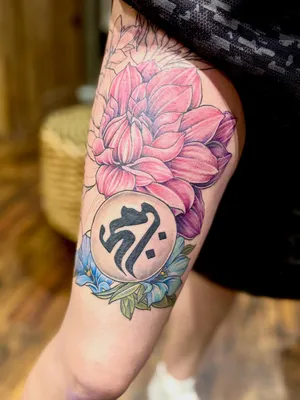
Images are quoted from works by artists listed on tattooers.jp (as of November 16, 2026). Tap an image to open the work.
Artist page: Horine
This piece sets Kiriku in a circle among flowers. We do not know which zodiac meaning it was made for, so we only describe the character and the composition.
Where the Zodiac Guardian Belief Comes From
The idea that each zodiac year has a guardian Buddha is a folk belief, not a teaching from Buddhist scripture. Here is what dictionaries and temples say about its roots.
The Japanese Dictionary of Esoteric Buddhism (Mikkyo Jiten), as cited by the National Diet Library database, explains that guardian deities seem to have been influenced by a custom popular in China: people wore slips of paper written with mantras as charms, and these became personal devotional deities. In medieval Japan the idea merged with onmyodo (a Japanese system of yin-yang divination from China) and became a folk belief, with the guardian decided by the zodiac animal of the birth year [2]. Wikipedia's article on the Eight Protectors notes that the eight deities are not mentioned in traditional Buddhist scriptures [15].
Baishoji, a Soto Zen temple, writes that the origin of the eight deities is unclear, that they were worshipped across Japan by around the Edo period, and that one theory links them to the eight trigrams of yin-yang divination, which divide the twelve animals among eight directions [4]. That is why the table has a direction column. Mark Schumacher's guide to Japanese Buddhist statuary dates the grouping to at least the Edo period: it appears in the enlarged 1783 edition of the illustrated iconography book Butsuzo-zui, but not in the 1690 first edition [16].
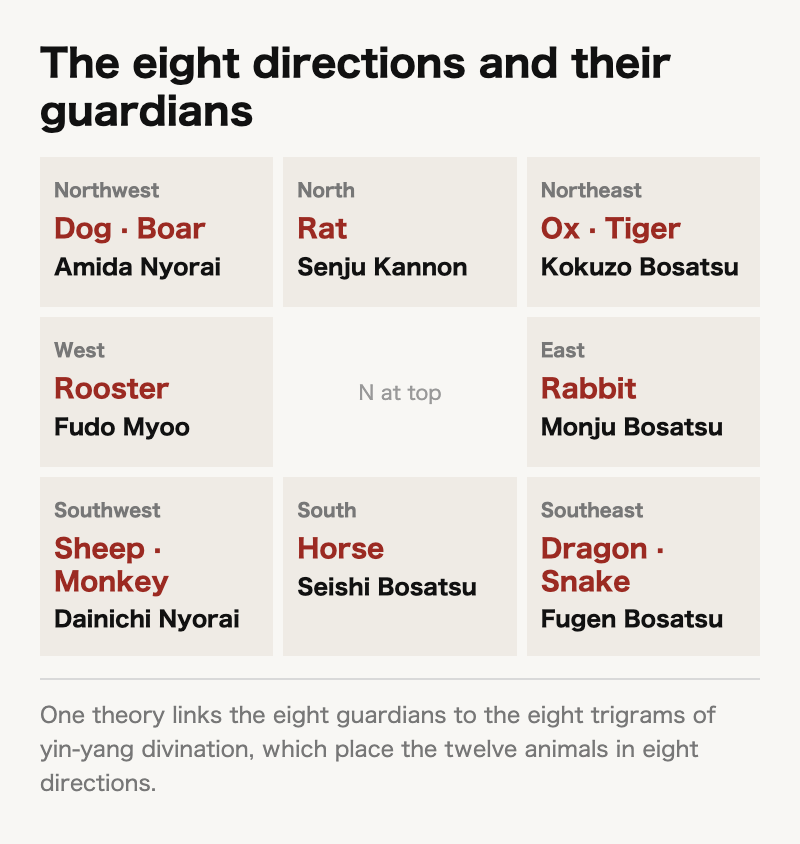 Figure: tattooers.jp editorial team
| Question | What temples, dictionaries and libraries say | What tattoo sites often say |
|---|---|---|
| Where it comes from | Mantra charms became personal deities, then merged with onmyodo in the medieval period into a folk belief tied to the birth year [2]. Origin unclear; one theory links it to the eight trigrams [4] | Your zodiac bonji protects you |
| Wearing it | A Shingon temple writes that wearing something with your guardian deity on it is also said to bring blessings [5]. This is about charms and images, not tattoos | Tattooing it protects you more strongly than a charm |
We could confirm the left column. We found no source for the right column itself.
Still, the idea of wearing a sacred character connects to how the belief began, with charms worn on the body. Seeing a bonji tattoo as an extension of that habit may be a helpful way to think about it (this is our interpretation).
Other Bonji People Choose
There is no rule that you must choose your zodiac character. Any bonji can be tattooed, but each one stands for a deity, so it is worth knowing which one before you choose.
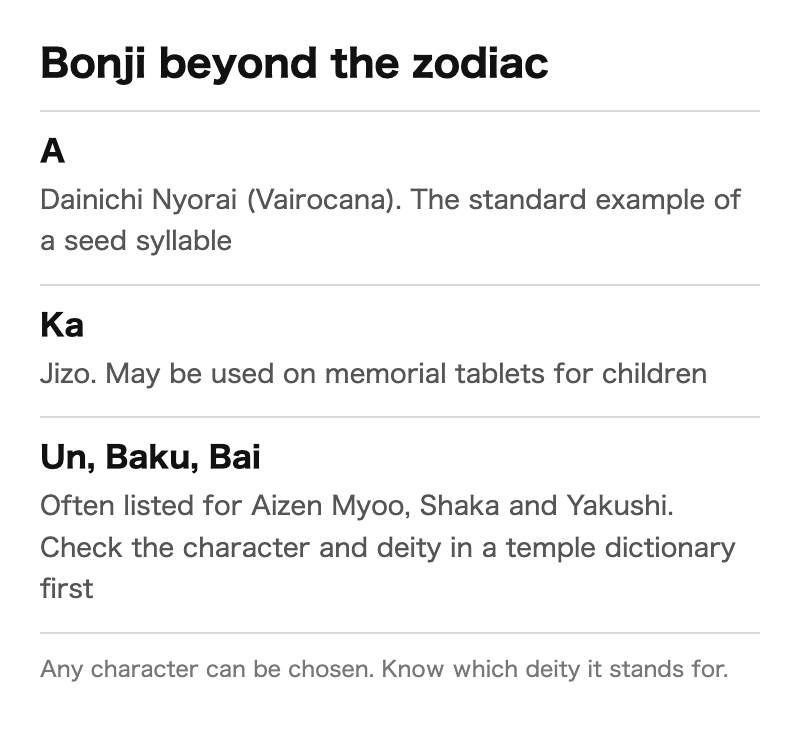 Figure: tattooers.jp editorial team
- A: Dainichi Nyorai (Vairocana). The standard example of a seed syllable [1]
- Ka: Jizo (Kshitigarbha). A memorial-tablet maker notes that it may be used on tablets for children [6]
- Un, Baku, Bai: often listed on tattoo sites for Aizen Myoo, Shaka (the historical Buddha) and Yakushi (the Medicine Buddha). We checked character-to-deity pairings in a temple dictionary only for the eight zodiac characters above, so look these up in a temple dictionary such as Tobi Fudo's [3] before you decide
Whichever character you choose, know which deity it stands for before you request it. It keeps the design conversation clear.
For other Japanese motifs and their meanings, such as Japanese dragon tattoos, koi, Fudo Myoo and Kannon as full images, see Japanese tattoo meanings.
Bonji Also Appear on Graves in Japan
Bonji have another side that visitors may not know: in Japan they are written on gravestones, Buddhist memorial tablets (ihai) and wooden stupa boards (sotoba) placed at graves.
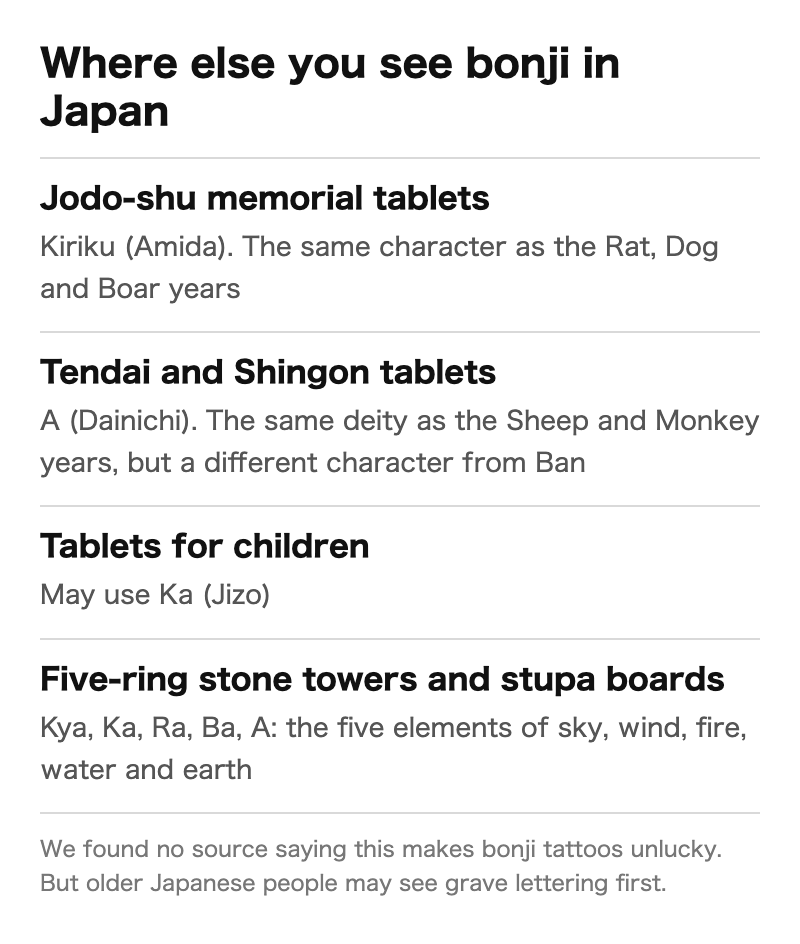 Figure: tattooers.jp editorial team
Kounji temple explains that bonji symbolize Buddhas, bodhisattvas, wisdom kings and devas, and are written on charms, memorial tablets, stupa boards and grave markers. Kiriku stands for Amida [7]. A memorial-tablet maker explains that the character on a tablet depends on the sect: "A" for Tendai and Shingon, "Kiriku" for Jodo-shu (Pure Land), often the character for "emptiness" in Zen, and usually none in Jodo Shinshu. Tablets for children may use "Ka" for Jizo [6]. Five-ring stone towers (gorinto) and stupa boards carry five characters from top to bottom, "Kya, Ka, Ra, Ba, A", for sky, wind, fire, water and earth [8].
| Where | Bonji | Meaning | Overlap with the zodiac characters |
|---|---|---|---|
| Jodo-shu memorial tablets | Kiriku | Amida | Same character as the Rat, Dog and Boar [6][7] |
| Tendai and Shingon tablets | A | Dainichi | Same deity as the Sheep and Monkey, but the zodiac character is Ban [1][3][6] |
| Tablets for children (may use) | Ka | Jizo | Not a zodiac character [6] |
| Five-ring towers and stupa boards | Kya, Ka, Ra, Ba, A | Sky, wind, fire, water, earth | Different characters [8] |
We found no source saying bonji tattoos are unlucky because the characters appear on graves. What we can say as fact is that bonji are characters people in Japan see at graves and family altars. Older Japanese people, or anyone used to seeing them at memorial services, may read a bonji tattoo as grave lettering first (this is our guess). Keep that in mind if you will spend time with Japanese family or in-laws.
Traveling With a Bonji Tattoo: The Issue Is Buddha Images
Before a trip, know this: the tattoos that have caused trouble in Buddhist countries are images of the Buddha.
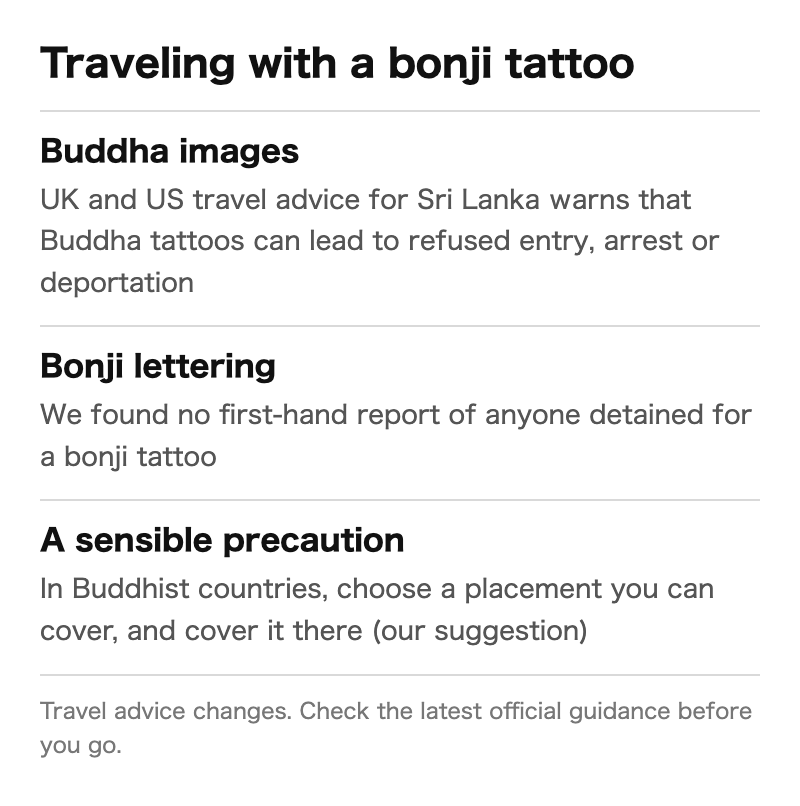 Figure: tattooers.jp editorial team
- The UK government's travel advice for Sri Lanka says: "If you have visible tattoos of Buddha, you can be refused entry to Sri Lanka or face deportation." (checked November 16, 2026) [9]
- The US State Department's advisory for Sri Lanka says to "avoid displaying religious images, such as Buddha tattoos," and that some visitors have been arrested or denied entry because of them [10]
- In April 2014, a British nurse was detained and deported from Sri Lanka over a Buddha tattoo, NPR reported [11]. A 2019 letter from the Human Rights Commission of Sri Lanka notes that in 2017 the Supreme Court found her arrest, detention and deportation violated the constitution [12]
The key distinction: every source above concerns images of the Buddha. We found no first-hand report of anyone detained over a bonji (lettering) tattoo. It is not accurate to say a bonji tattoo will get you arrested abroad.
Bonji do stand for Buddhist deities, though. So when you travel to Buddhist countries, it is sensible to choose a placement you can cover, and to cover it while you are there (our suggestion). Travel advice changes; check the latest official guidance once you know where you are going. For covering tattoos in Japan itself, see how to cover tattoos in Japan and the tattoo-friendly onsen map.
Is a Bonji Tattoo Disrespectful?
Some people worry that a bonji tattoo is disrespectful to Buddhism. Others wear one lightly, as a charm, without any faith. Both feelings are natural.
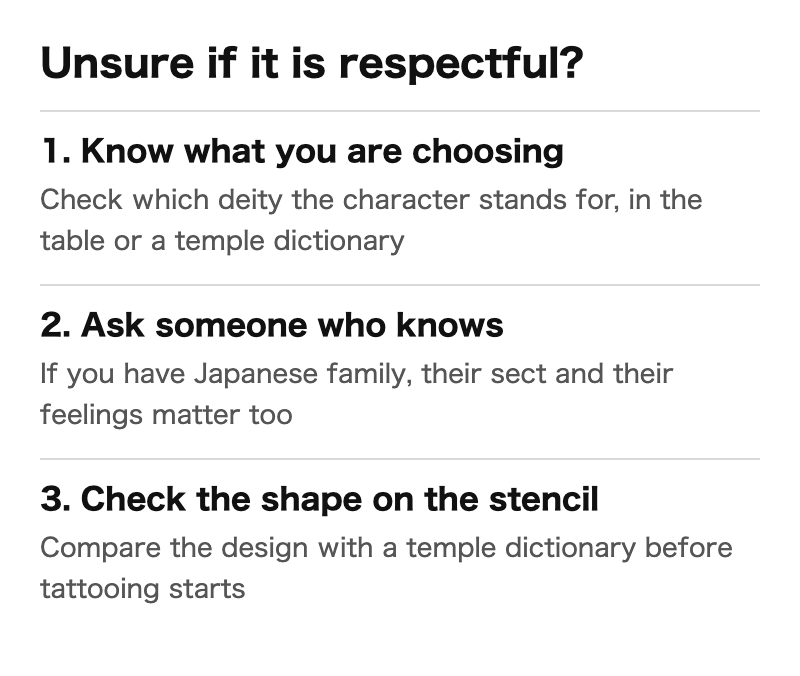 Figure: tattooers.jp editorial team
As far as we could find, no temple or monk has published an official position for or against bonji tattoos. The closest statement we found is from Kongoin, a Shingon temple: "it is also said that wearing something bearing your guardian deity brings blessings" [5]. That was written about charms and images, not tattoos.
tattooers.jp does not rule on whether bonji tattoos are disrespectful. We think what matters is less whether you are a believer, and more whether you choose the character with respect for what it stands for. If you are unsure, three steps help:
- Know what you are choosing: check which deity the character stands for, in the table above or a temple dictionary
- Ask someone who knows: if you have Japanese family, their sect and their feelings matter too
- Check the shape on the stencil: see the next section
Getting the Character Right: Three Checks on the Stencil
Bonji are easy to get wrong without noticing. The Mikkyo 21 Forum, a Shingon Buddhist educational site, explains that Siddham calligraphy is required study for Shingon monks, that the quality of the strokes is taken very seriously, and that there are set techniques such as joining strokes in a particular way [13]. A small slip that a non-reader would never see can look like a mistake to someone who reads the script.
Writing styles have a history too. The International Bonji Buddhist Art Association explains that bonji were first written with a flat, spatula-like brush, then with broad brushes, then with round brushes [14]. In tattoos you can see the same contrast: broad, flat strokes in a brush-stamp style, or thinner lines in a round-brush style.
When you see the design, check these three things:
- Compare with a temple dictionary: Put it next to a dictionary published by a temple, such as Tobi Fudo's [3]. Is it mirrored left to right? Upside down? A character pulled from a random image search or font can carry these errors
- Dots and marks: Many characters have dots or small marks above or to the right. Are they all there, and in the right place?
- Brush style and size: A broad flat-brush look or a fine round-brush line changes the feel. The smaller the tattoo, the finer the lines, and fine details tend to blur over the years (this is a general expectation, not a sourced fact). For small pieces, put the size you want in your request, so the artist can say whether the character will hold its shape
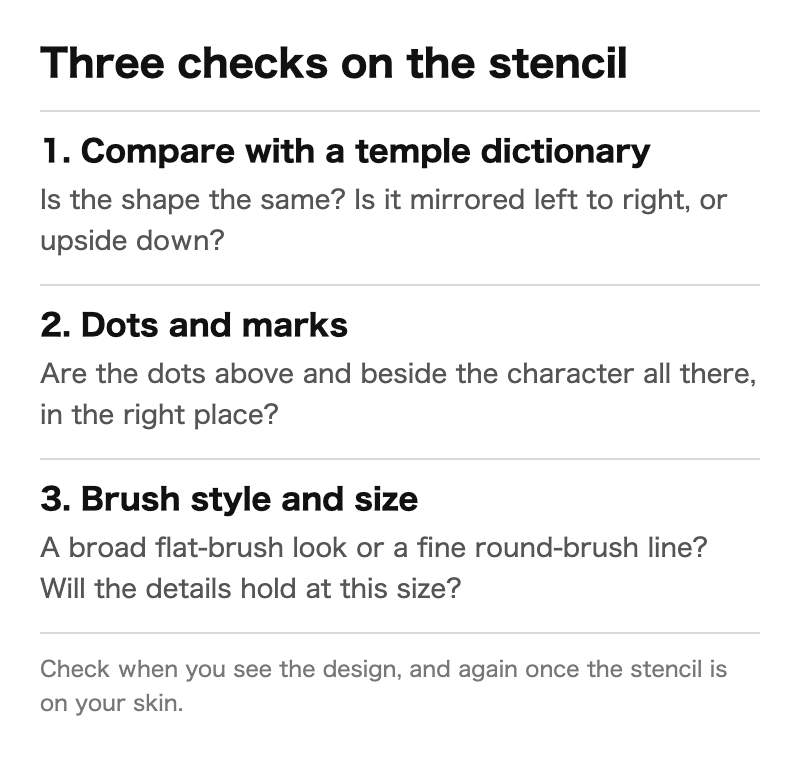 Figure: tattooers.jp editorial team
Check once more when the stencil is on your skin, before tattooing starts. On a curved area such as the wrist or neck, the character can end up tilted.
Here is an example of the broad, flat-stroke style:

Images are quoted from works by artists listed on tattooers.jp (as of November 16, 2026). Tap an image to open the work.
Artist page: kazz
We could not find a clear example of the fine round-brush style among the works listed on the site.
Placement and Size
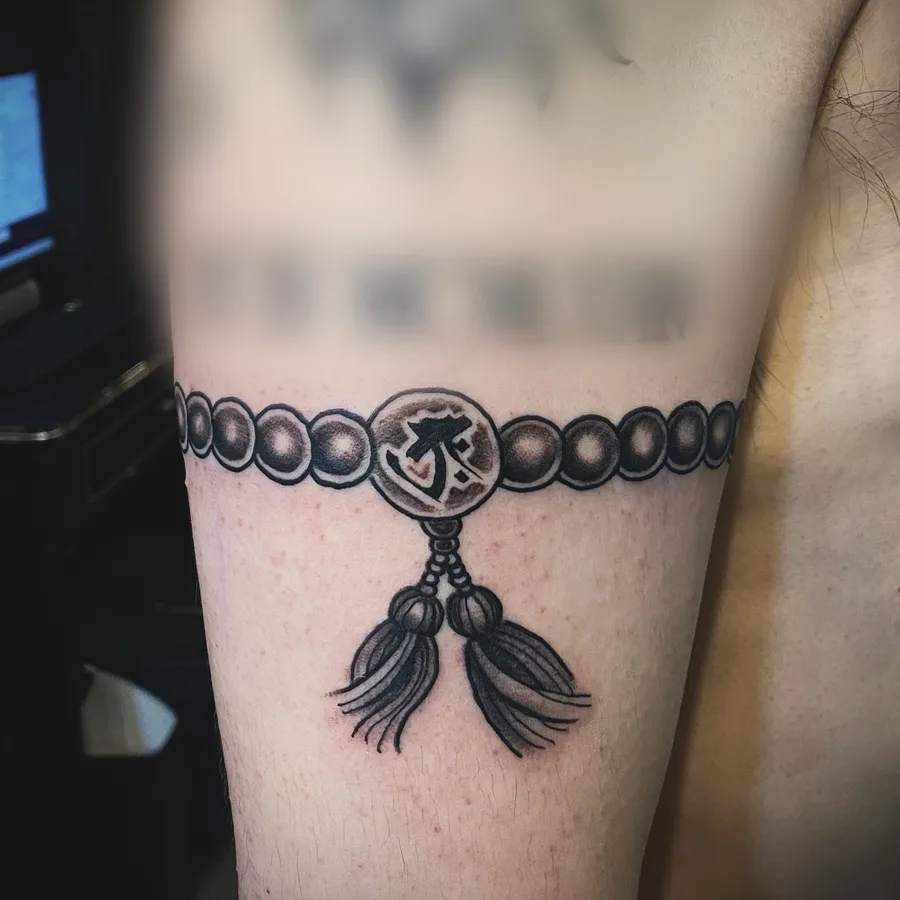
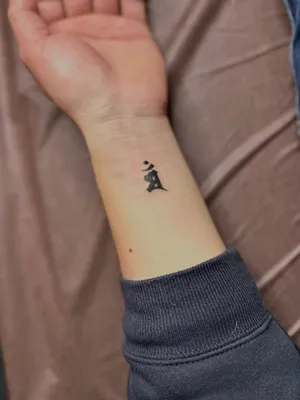
On tattooers.jp, bonji appear on fingers, legs, arms, the stomach, the back and ankles. Some stand alone, others are paired with lotus flowers, clouds or Buddhist prayer beads.
Images are quoted from works by artists listed on tattooers.jp (as of November 16, 2026). Tap an image to open the work.
Artist page: ToM
This piece wraps a string of prayer beads around the upper arm, with a bonji on the center bead and tassels hanging below. It follows the shape of the arm like an armband. We did not identify which character it is.
Choose the placement by whether you want it seen. Given the two sections above (grave lettering in Japan, travel to Buddhist countries):
- Visible spots (fingers, wrist, neck): easy to show, but also easy for family, coworkers and people abroad to notice. Browse finger, wrist and neck tattoos
- Spots you can cover (back, stomach, legs, inner arm): you decide when to show it. A larger area also leaves room for a lotus or clouds around the character (see lotus and other Japanese flowers). See arm tattoos
- Small sizes: on a finger, wrist or ankle, make sure the shape will not blur. Browse one-point tattoos
Pain depends on the spot: see tattoo pain by body part.
Images are quoted from works by artists listed on tattooers.jp (as of November 16, 2026). Tap an image to open the work.
Artist page: Horiaki
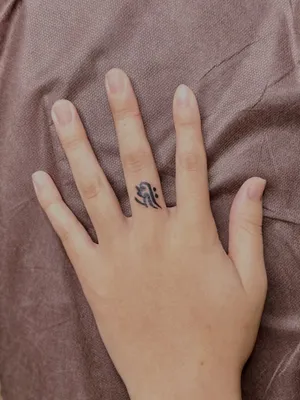
Left, a finger; right, a wrist, posted as the client's first tattoo. Both are a single small character. We did not identify the character on the wrist.
Getting a Bonji Tattoo in Japan
Start with artists who post lettering and small one-point work. tattooers.jp has no bonji tag, so begin with these lists:
- Save works you like from lettering tattoos and one-point tattoos, paying attention to line weight and the feel of the characters. To pair a character with a lotus, see lotus tattoos and spiritual tattoos
- Note the artists whose work you like. You can share them in the form as a reference; we match you with the artist who fits your request. The artists in this article are Suzume (Kyoto), Tsuda (Osaka), Horine and ToM (Kanagawa), Horiaki (Chiba), kazz (Saitama) and Kenta (Tokyo)
- Write it down in your request: the character (or your birth year and zodiac animal), which deity you mean if it is Kiriku, the placement and the size, and that you want to compare the design with a temple dictionary. You do not contact artists yourself: put these in the inbound request form with your dates, and we pass them on to the artist we match you with
We message you on Instagram within 48 hours, and the ¥15,000 deposit is fully refunded if we can't match you. For costs, see the tattoo price guide.
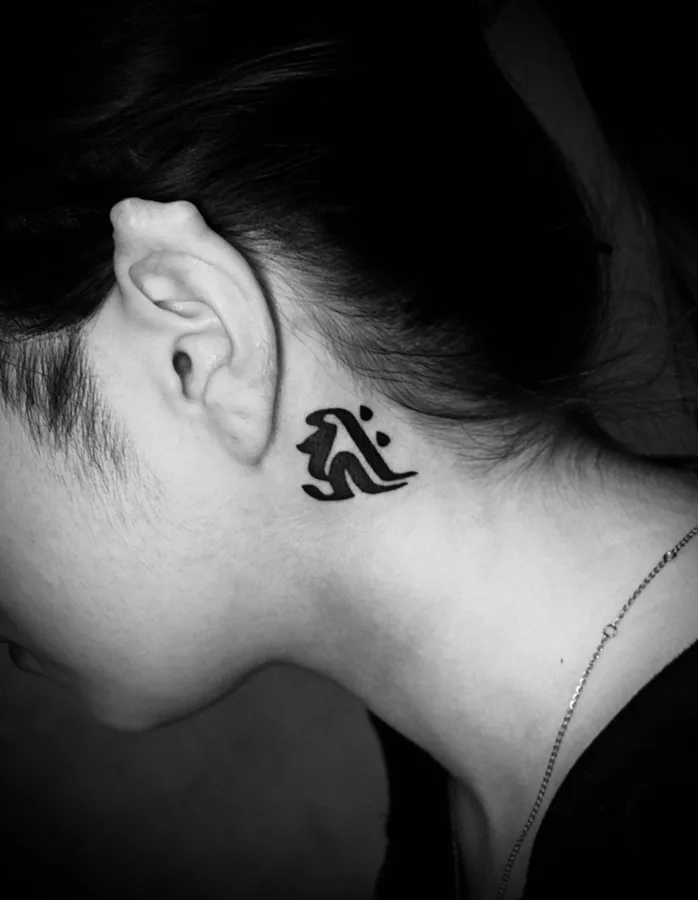
Artists known for brush-style kanji sometimes take bonji too. The piece below is a single small character behind the ear, on the neck.
Images are quoted from works by artists listed on tattooers.jp (as of November 16, 2026). Tap an image to open the work.
Artist page: Kenta
The artist's caption explains that bonji are Buddhist characters representing Buddhas and bodhisattvas, seen at temples and on charms, statues and gravestones. We did not identify the character.
Frequently Asked Questions
Q. Which bonji is mine?
Find your birth year in the zodiac table. In Japan the zodiac animal is usually counted by the calendar year from January 1, though some fortune-tellers count from Risshun (around February 4). The Rat and the Dog/Boar share Kiriku, but for different deities (Senju Kannon and Amida). Ox and Tiger, Dragon and Snake, and Sheep and Monkey also share one character each.
Q. What does a bonji tattoo mean?
A bonji is a seed syllable: one Siddham character that stands for one Buddhist deity [1]. Its meaning is the deity it represents, for example Fudo Myoo for Kan or Monju (Manjushri) for Man. Blessings attributed to each deity vary by temple and book, so treat them as "it is said".
Q. Is a bonji the same as a Sanskrit tattoo?
A bonji is one kind of Sanskrit tattoo. Bonji use Siddham, the script handed down in Japanese Buddhism. Many other Sanskrit tattoos, including the common Om (ॐ), use Devanagari, a different script.
Q. Can I choose a bonji that is not my zodiac character?
Yes. There is no rule. Each character stands for a deity, so check its meaning, and its shape in a temple dictionary, before you choose.
Q. Is a bonji tattoo disrespectful?
We found no official statement from a temple or monk about bonji tattoos either way. Many people wear one as a charm, with respect for its background. Bonji are also written on graves and memorial tablets in Japan, so if you have Japanese family, it is worth asking how they feel.
Q. Will a bonji tattoo cause problems abroad?
Travel advice names tattoos of Buddha images, especially in Sri Lanka [9][10]. We found no first-hand report of anyone detained over a bonji tattoo. Since bonji stand for Buddhist deities, covering it in Buddhist countries is a sensible precaution (our suggestion).
Summary
- A bonji tattoo is one Siddham character standing for one Buddhist deity. In Japan, one of the most familiar choices is the character of your zodiac guardian deity
- Eight deities cover twelve animals, so some years share a character. The Rat and the Dog/Boar are both Kiriku, for different deities
- The zodiac guardian pairing is a folk belief, not scripture. It merged with yin-yang divination in medieval Japan and was popular by the Edo period
- Temples and sources can differ on the character, so follow your family's sect if it has one
- Bonji also appear on graves and memorial tablets in Japan. We found no source calling bonji tattoos unlucky, but older Japanese people may notice
- Trouble abroad has involved Buddha images, not bonji. Covering a bonji in Buddhist countries is still sensible
- On the design, compare the shape with a temple dictionary, check the dots, and choose a size that will hold
Planning a bonji tattoo in Japan? Get matched with an artist in Japan: tell us your dates, the character and the placement, and we message you on Instagram within 48 hours. The ¥15,000 deposit is fully refunded if we can't match you. You can also browse lettering tattoos and tattoo artists in Japan on tattooers.jp.
References
Many sources are Japanese temple and library pages; titles are our translations. Links open external sites.
- Research Institute for Languages and Cultures of Asia and Africa, Tokyo University of Foreign Studies. Siddham (bonji) (Japanese). Accessed November 15, 2026.
- National Diet Library, Collaborative Reference Database (Osaka Prefectural Central Library) (2021). I want to know about guardian deities (mamori honzon) (citing Shinpen Butsuzo Zukan and Mikkyo Jiten, Japanese). Accessed November 16, 2026.
- Shoboin temple (Tobi Fudo). Zodiac guardian deities and their bonji (bonji dictionary, Japanese). Accessed November 16, 2026.
- Baishoji temple (Soto Zen). The eight guardian deities (Japanese). Accessed November 16, 2026.
- Kongoin temple (Shingon, Buzan school). Copying the mantra of your guardian deity (Japanese). Accessed November 15, 2026.
- Nagomi Kobo (2024). Do memorial tablets need bonji? (Japanese). Accessed November 15, 2026.
- Kounji temple (2025). Bonji on stupa boards (Buddhism lecture no. 95) (Japanese). Accessed November 15, 2026.
- Ohaka Kiwamebito no Kai (2023). Bonji on graves (Japanese). Accessed November 15, 2026.
- UK Foreign, Commonwealth & Development Office. Sri Lanka travel advice: Safety and security. Accessed November 16, 2026.
- U.S. Department of State. Sri Lanka Travel Advisory. Accessed November 16, 2026.
- NPR (2014). Tattoo Of Buddha Gets British Tourist Thrown Out Of Sri Lanka. Accessed November 15, 2026.
- Human Rights Commission of Sri Lanka (2019). HRCSL issues guidelines on arrests. Accessed November 16, 2026.
- Mikkyo 21 Forum (Encyclomedia Kukai). How bonji are written (Japanese). Accessed November 15, 2026.
- International Bonji Buddhist Art Association. What are bonji? (Japanese). Accessed November 15, 2026.
- Wikipedia. Eight Protectors of The Twelve Zodiac. Accessed November 16, 2026.
- Mark Schumacher, A to Z Photo Dictionary of Japanese Buddhist Statuary. Eight Zodiac Protectors of the 12 Zodiac Animals (China and Japan). Accessed November 16, 2026.
- Wikipedia. Japanese New Year. Accessed November 16, 2026.
- Wikipedia (Japanese). Eto (sexagenary cycle) (Japanese). Accessed November 16, 2026.
Meanings in this article separate what temples, dictionaries and libraries record from what is said in the tattoo world, and are not fixed rules. Parts marked "our suggestion", "our guess" or "our interpretation" could not be confirmed in sources. Readings of the characters in the works were judged by our editors by comparing them with Tobi Fudo's bonji dictionary. Travel advice changes, so check the latest guidance before you travel.
